
Campfire Conversations: Why People Open Up Faster in the Wild
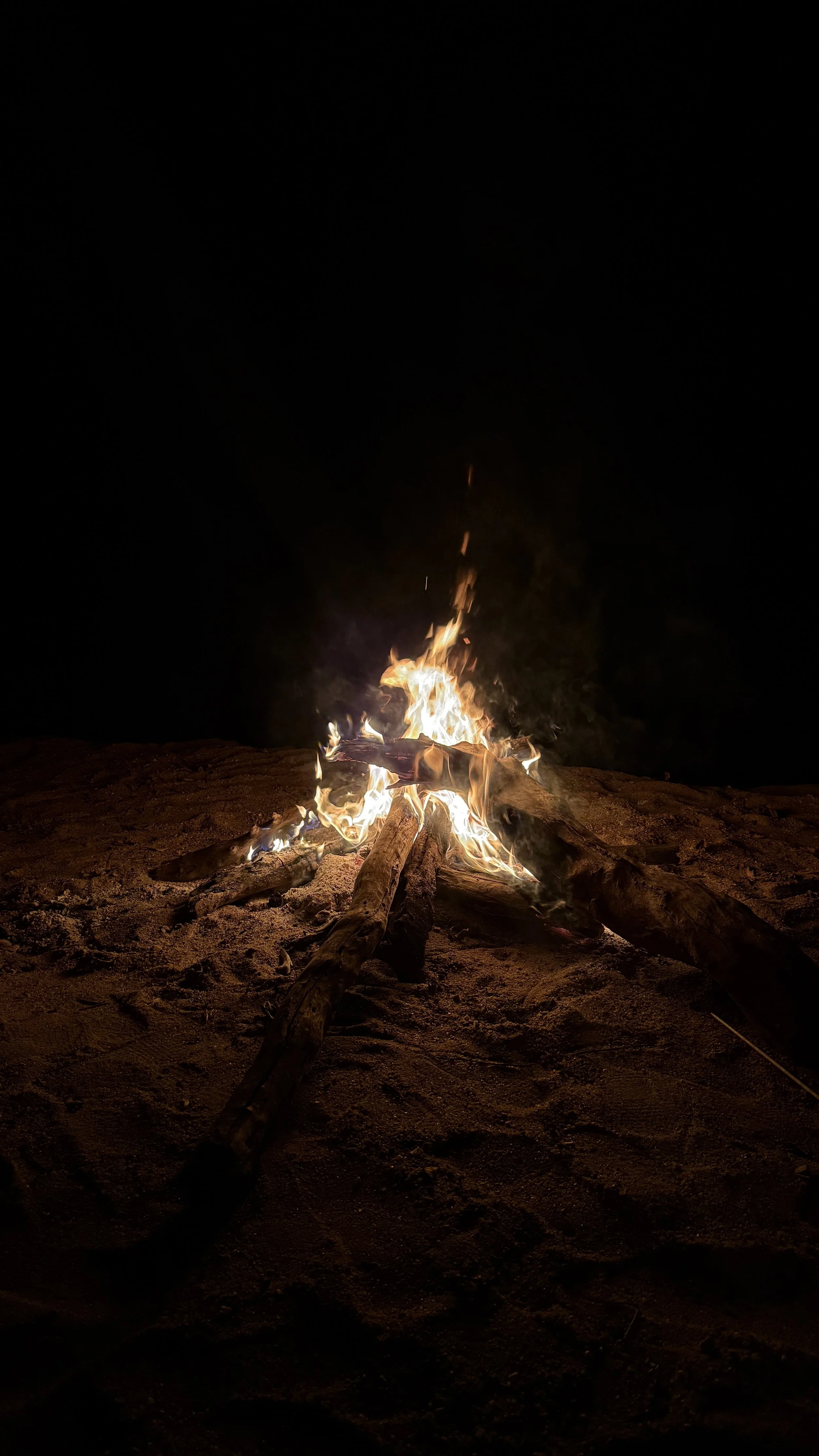
There are conversations that belong to bright rooms, busy tables, and carefully structured days.
Then there are the conversations that only seem to arrive once the fire has settled, the air has cooled, and the night has done enough of the holding that nobody feels the need to force anything.
This is one of the quiet powers of camping.
People often speak differently in the wild.
Not because camp magically makes everyone profound. Not because every evening turns into a life-changing exchange. But because the conditions around a campfire change the rhythm of how people relate to one another. The body slows. The day’s small tasks are done. The light softens into something warmer and less performative. The world beyond the circle grows dark and alive. There is less to look at, less to manage, and somehow, less to hide behind.
And in that atmosphere, conversation often changes.
It becomes less polished.
Less hurried.
Less strategic.
Sometimes lighter and funnier.
Sometimes more reflective.
Sometimes quieter, but more honest.
In Sri Lanka, where evenings outdoors can feel especially textured — insect song rising in layers, tree lines disappearing into darkness, a gentle coolness after the heat of the day, firelight holding a small circle of warmth in a very large night — this shift can feel especially natural. The campfire does not only provide heat or light. It becomes a center. A place where the group gathers not because it has been told to, but because something about that circle makes people want to stay.
For many people, that is where the most memorable human parts of camp begin.
Not in the big itinerary moments.
Not in the planned activity.
But in the conversations that emerge when nobody is trying too hard, and the wild has already done enough to quiet the room inside the mind.
What this article will help you understand
If you only have a few minutes, here is the heart of it:
People often open up faster around a campfire because the outdoor setting reduces performance, lowers distraction, and gives conversation a slower, more natural pace. Shared tasks during camp build familiarity first, and the fire creates an atmosphere where silence feels easier, attention feels steadier, and people do not need to work as hard to connect.
What helps these conversations happen is not only the fire itself.
It is the whole rhythm around it:
The shared effort that came before
The fading of daylight
Fewer distractions
The comfort of warmth
The permission not to fill every silence
The feeling that everyone has finally arrived into the same pace
This is why campfire conversations can feel more honest than conversations in ordinary settings.
The environment does not force depth.
It simply makes it easier for people to stop performing long enough for something real to surface.
Why people often speak differently outdoors
Most people do not realize how much ordinary conversation is shaped by environment.
Indoors, especially in modern life, many conversations happen in spaces that subtly encourage interruption, self-presentation, or mental fragmentation. Bright lights. Screens nearby. Background noise. Time pressure. Chairs arranged around tasks rather than presence. Even when people care about each other, the atmosphere around them often keeps the mind slightly busy, slightly guarded, slightly elsewhere.
Outdoors, especially in a well-paced camp setting, something changes.
The environment becomes simpler in a human way. Not empty, but less split. The sounds belong to one place. The light is softer. The body is not still performing indoor busyness. Shared attention gathers more naturally. A person is not constantly being pulled into other channels of thought by the usual signals of daily life.
This matters because conversation is not only verbal.
It is also nervous-system based.
When the body begins to feel less scattered, the way people speak often changes too. They stop rushing their thoughts. They stop filling every pause. They become more willing to let a sentence arrive in its own time. They become easier to sit beside without constant social effort.
That is one reason campfire conversations often feel different. They are not always “deeper” in a dramatic sense. But they are often less defended.
Less defended conversations have more room for truth.
Shared work softens people before the conversation even begins
One of the reasons people open more naturally in camp is that, by the time they sit around the fire, they have usually already done something together.
This matters more than most people realize.
Connection often happens more honestly after shared effort than before it. A group that has arrived, helped set up, moved things, made tea, sorted small tasks, or adjusted together to the rhythm of the place has already crossed a subtle threshold. People are no longer strangers sharing a location. They are already participating in a temporary shared life.
This changes the emotional tone.
The conversation that follows no longer has to create connection from nothing. Some connection has already been built through doing. And because the work was usually simple, practical, and unforced, it does not feel performative. It feels ordinary. Which is exactly what makes it useful.
At a campfire, people are not only warmed by the fire itself. They are warmed by the fact that the day has already given them shared reference points:
the setup,
the dust,
the tea,
the weather,
the small mishaps,
the first sightings,
the first quiet.
These things become the social groundwork. They make people easier around one another. And often, once that ease has been built through doing, talk begins to flow with much less strain.
In this sense, the best campfire conversations often begin hours earlier — in the simple work of arriving together.
Fire gives attention somewhere gentle to rest
A campfire changes the shape of attention.
This is one of its most underrated gifts.
Around a fire, people do not have to maintain eye contact constantly in order to feel engaged. They do not need to keep “holding” the conversation with the same intensity as in a bright room. The fire itself absorbs some of the pressure. It gives the eyes somewhere soft to go. It lets a group share focus without forcing social performance every second.
That may sound small, but it changes a lot.
Many ordinary conversations become tiring because people feel subtly compelled to manage them. To respond quickly. To keep them moving. To prove attentiveness in a way that is socially acceptable. Around a fire, that pressure often drops. People can pause. Watch the flames. Add a thought when it comes. Sit in silence without needing to repair it immediately.
The conversation becomes less like a task and more like a shared atmosphere.
This is one reason people often say things around a campfire that they might not say in more formal settings. The environment lowers the social sharpness of the exchange. It makes room for reflection, humor, memory, and quiet honesty without demanding that every word land perfectly.
Because the fire itself is warm, alive, and visually absorbing, it often helps the mind settle into one place at a time — which is exactly what scattered people need in order to become more present with one another.
Silence feels easier in the wild
One of the strongest reasons people open up more naturally in camp is that silence no longer feels like a problem.
In ordinary life, many people have become uncomfortable with conversational gaps. Silence is often treated as awkwardness, disconnection, or a sign that something needs to be fixed. So people fill it — with extra talk, with quick jokes, with subject changes, with noise, with whatever keeps the moment from feeling exposed.
But outdoors, and especially around a fire, silence has help.
The environment carries part of the moment:
the insects,
the breeze,
the crackle of wood,
the movement of light,
the sound of night settling beyond the circle.
Because of that, silence rarely feels empty in the same way.
This is important, because when people stop fearing silence, they stop talking only to protect themselves from it. They begin speaking when they actually have something to say, and listening more fully when someone else does. The rhythm becomes less crowded.
Once that happens, conversations often become more honest.
Not because everyone suddenly becomes deeply vulnerable, but because there is no longer the same pressure to keep proving social momentum. A person can think. Pause. Change course. Return to something. Or say nothing for a while and still remain part of the circle.
That is a very rare kind of ease.
For many people, it is one of the most restorative parts of the campfire itself.
Darkness changes what people are willing to share
There is something about the night that softens performance.
Not in a mystical way, necessarily. More in a human one.
When daylight fades, the sharpness of visual social cues drops a little. Firelight does not expose people the way bright indoor lighting can. Faces are still visible, but less defined. The world beyond the circle grows indistinct. The mood becomes more inward, more contained, more attentive to presence than presentation.
This often changes what people are willing to say.
A person may share a memory more easily.
Admit to being tired.
Laugh more honestly.
Tell the truth with less self-consciousness.
Or simply speak in a tone that feels closer to who they are when they are not managing how they are being seen.
In Sri Lanka, where evening can settle with a particular kind of atmosphere — the heat loosening, the insects rising, the darkness gathering fully beyond the edges of camp — this inward shift can feel especially strong. The night does not only reduce visibility. It changes the emotional architecture of the space.
The fire becomes the center.
The group becomes the circle.
And the conversation often becomes more human because the world has stopped asking for so much presentation.
Campfire talk is not always “deep” — and that is part of the beauty
It is easy to romanticize campfire conversation as if every fire leads to profound truths, life confessions, or soul-level revelations.
Sometimes it does not.
Sometimes the best campfire talk is light.
Funny.
Rambling.
Half practical, half ridiculous.
A story that gets retold.
A memory from childhood.
A small disaster from the day that becomes much funnier by night.
A conversation that drifts nowhere “important” and still becomes one of the best parts of the trip.
That matters too.
Because the value of campfire conversation is not only in emotional depth. It is in the change of texture. The way people talk when they are less rushed, less distracted, and less defended. Even ordinary topics can feel more satisfying when the atmosphere is right.
A joke lands differently.
A story stretches out more naturally.
A silence after laughter feels fuller.
People listen with their whole body a little more.
The fire does not force depth.
It allows authenticity.
And authenticity can look like many things:
honest laughter, quiet warmth, gentle reflection, or simply speaking in a way that feels less filtered than usual.
Why groups often bond faster around a fire
A campfire does something that many structured group activities cannot:
it creates closeness without forcing intimacy.
This is one reason groups often bond surprisingly quickly in camp. They are not being asked to “share” in some staged or artificial way. They are simply placed in conditions that reduce social noise and increase shared presence. The fire gives them a reason to gather. The environment gives them enough atmosphere that no one has to manufacture connection too aggressively.
This is especially helpful for mixed groups, new groups, families, and people who might otherwise struggle to find a common rhythm. Around a fire, hierarchy often softens. The setting levels people slightly. Conversation becomes less about roles and more about being there together.
In Sri Lanka, where night outdoors can feel immersive and complete in a way many people do not often experience in city life, this effect can become even stronger. The campfire does not sit inside the world of daily routine. It temporarily replaces it with something simpler and older:
Warmth,
Shared space,
Attention,
Time unfolding without sharp edges.
People often connect well in places like that because connection is no longer being asked to compete with so much else.
Children often open up differently too
This does not only apply to adults.
Children often speak differently around campfires as well — though in their own way.
They may ask questions they would not usually ask.
Retell the day with surprising detail.
Become more reflective without seeming to notice it.
Stay quietly close to the group in a way that feels deeper than ordinary family conversation at home.
Or say something simple and revealing because the environment has made them feel secure enough not to perform.
For families, this can be one of the most beautiful parts of the evening.
Not because every child suddenly becomes poetic, but because the usual patterns of home can loosen. Screens are absent. Artificial stimulation drops. The child has already spent the day in a richer sensory environment. The fire offers focus. The group is gathered. There is no rush to end the moment.
And in that setting, children often become more themselves.
The same is true for teenagers and quieter family members who may not always open easily in daily life. Camp can create conditions where people speak not because they are being prompted, but because the atmosphere has finally become gentle enough.
What people often get wrong
A few common misunderstandings can make people miss what campfire conversation really offers:
1. Thinking connection must be forced
Often, the best conversations emerge when the conditions are right, not when intimacy is pushed.
2. Assuming silence is awkward
Around a fire, silence is often part of the conversation, not a break in it.
3. Expecting every campfire talk to be profound
Light, funny, ordinary conversation can be just as meaningful.
4. Underestimating the role of shared work beforehand
Connection often opens more naturally after people have already done simple things together.
5. Treating the fire as only atmosphere
The fire shapes attention, rhythm, and social ease in real ways.
If you want better campfire conversations, start here
If you want the evening around the fire to feel easier, more natural, and more connected:
Let the day slow down before night
Do simple things together before sitting down
Don’t over-structure the conversation
Allow pauses
Keep the fire as the center, not constant devices or distractions
Let humor and ordinary talk matter too
Trust that connection often emerges more naturally than it can be engineered
You do not need to make the fire “special.”
You need to let the conditions around it do what they already know how to do.
What campfire conversations really give back
At their best, campfire conversations give people something increasingly rare:
a way of being together that is neither rushed nor heavily managed.
They create room for:
Slower thought,
Easier listening,
Honest laughter,
Unforced storytelling,
The kind of silence that feels companionable rather than empty.
And in doing so, they often remind people of something very simple and very old:
that human beings do not always need more stimulation to connect better.
Sometimes they need less.
Less distraction.
Less performance.
Less brightness.
Less pressure.
A small circle of warmth, a little shared time, and enough stillness for people to stop scattering can do far more than most people expect.
A gentle closing thought
Perhaps that is why people open up faster in the wild.
Not because the campfire demands confession.
Not because the night makes everyone profound.
But because, for a little while, the world becomes simpler enough that people no longer have to work so hard to be with one another.
The fire holds the center.
The dark holds the edges.
The sounds of the night hold the silence.
And inside that small circle, conversation becomes less about performing connection — and more about quietly allowing it.
In Sri Lanka, where evenings outdoors can feel so alive and so complete, that shift can be especially beautiful.
Sometimes the best thing a campfire gives a group is not the warmth.
It is the space to become more honest around it.