
For Researchers, Birders, and Field Learners: Why Camps Make Better Classrooms Than Walls
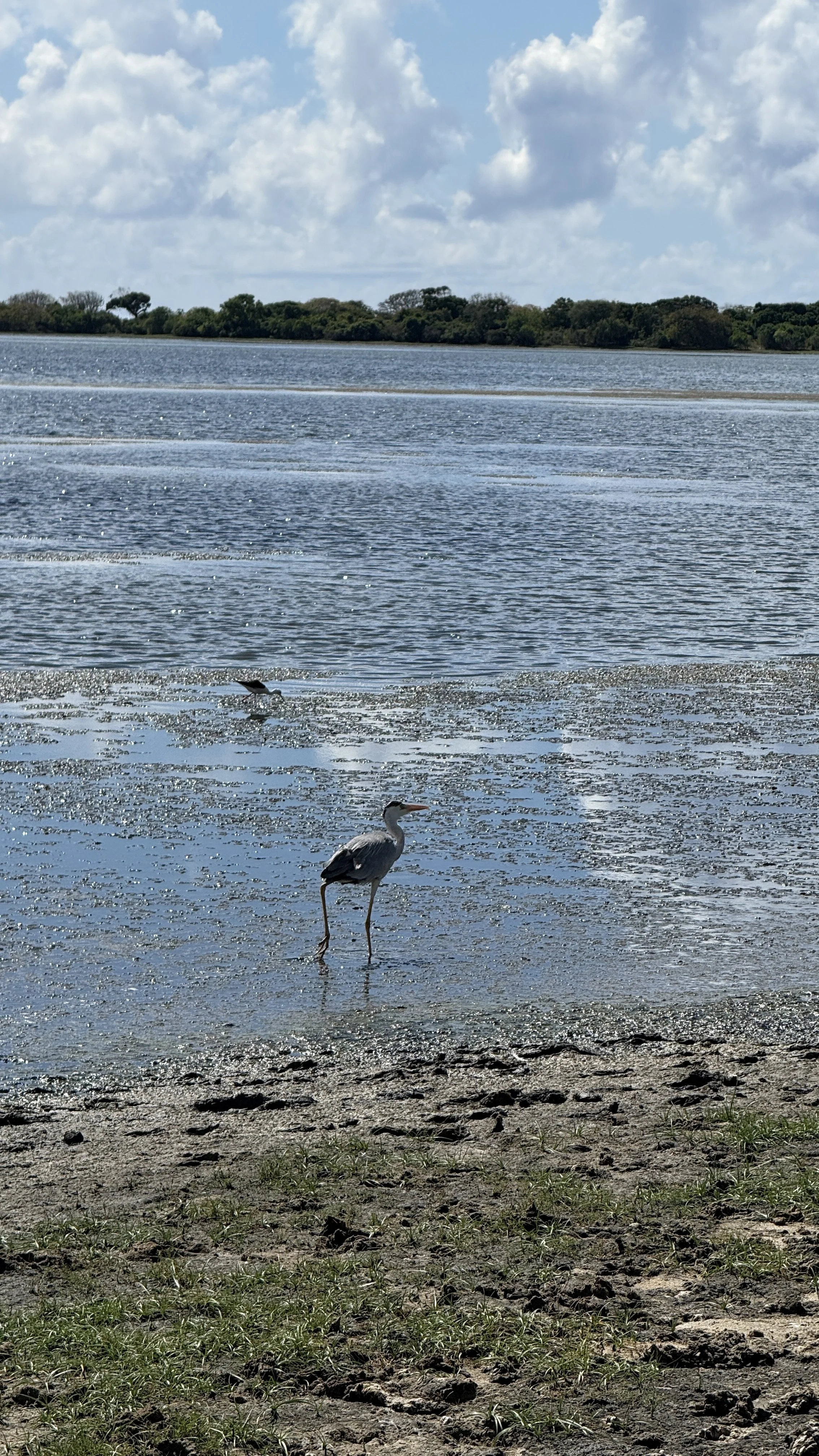
There is a difference between learning about a place and learning inside one.
A book can teach names. A lecture can teach systems. A classroom can give structure, vocabulary, and useful models for understanding the natural world. All of that matters. But some forms of understanding do not fully arrive until the body is in the landscape, the senses are involved, and time is allowed to move at the pace of the place itself.
This is where camp changes everything.
A campsite, especially in a living landscape, is not only a place to sleep between activities. It can become a field station in the oldest and most human sense — a temporary base from which observation deepens, patterns become clearer, and learning begins to root itself in direct experience rather than abstraction.
For researchers, birders, students, naturalists, photographers, and curious field learners of all kinds, this matters enormously.
Because the outdoors do not always reveal their best lessons in passing.
They reveal them in repetition.
In waiting.
In the difference between dawn and midday.
In what you hear before you see.
In what changes from one morning to the next.
In what becomes visible only after you have sat quietly long enough for the place to stop treating you as an interruption.
And in Sri Lanka, this is especially true.
This island is rich in ecological complexity. Even a seemingly quiet patch of land may hold layers of activity across species, sound, light, weather, and terrain. Edges matter. Timing matters. Rain matters. Dawn matters. A single location can teach very different lessons depending on the hour, the season, and the quality of your attention.
This is why camp can make such a powerful classroom.
Not because it replaces formal knowledge.
But because it gives that knowledge somewhere alive to land.
What this article will help you understand
If you only have a few minutes, here is the heart of it:
Camps make better classrooms than walls when the goal is observation, ecological awareness, field learning, or nature-based understanding. That is because camp places the learner inside the rhythms of a living environment. Instead of entering a place briefly and leaving, you remain long enough to notice repetition, timing, behavior, sound, and subtle change.
This makes learning deeper because:
Attention improves
Context becomes visible
Observation becomes continuous
Memory becomes embodied
Theory gains real-world meaning
For birders, students, researchers, educators, photographers, and anyone trying to understand nature more honestly, camp offers something ordinary classrooms rarely can- time inside the subject itself.
The place is not an example.
It is the lesson.
Why some learning cannot happen in passing
A great deal of modern nature learning happens in fragments.
A short walk.
A quick talk.
A drive-through sighting.
A lecture delivered far from the field.
A few notes taken in a rush before everyone moves on.
These forms of learning are not useless. They can be valuable introductions. But they often struggle to produce depth because they do not allow enough time for the landscape to reveal pattern.
And pattern is where real field understanding begins.
A place visited briefly may show you something.
A place lived in, even for a short camp, begins teaching you how that something fits into a larger rhythm.
You do not only see one bird.
You notice what time it becomes active.
You do not only hear one call.
You begin hearing how the soundscape changes across the morning.
You do not only walk across one habitat edge.
You start noticing what gathers there, what avoids it, and how movement differs between conditions.
This is the difference between information and relationship.
Passing through can give you facts.
Staying put, attentively, begins giving you context.
Context is what turns observation into real learning.
Camps create continuity, and continuity changes everything
One of the biggest strengths of camp as a learning base is continuity.
When you stay in one place long enough, the landscape stops being a collection of isolated moments and starts becoming a system with rhythm. You notice what repeats, what changes, what depends on weather, what depends on light, and what only becomes obvious once you have seen the same area at more than one time of day.
This kind of continuity is incredibly valuable for field learners.
A person who observes a place at dawn, then again in late afternoon, then again after rain, then again the following morning is not simply gathering more data. They are building a sense of the place’s behavior. That kind of learning is much harder to create in short, disconnected visits.
Camping supports this naturally.
You wake inside the environment.
You hear before you even stand.
You notice what happens around meals, around stillness, around weather shifts.
You begin understanding the site not only as a location, but as a living pattern unfolding over time.
For birders, this may mean recognizing how activity changes by hour.
For students, it may mean understanding that ecology is not static.
For researchers, it may mean catching small consistencies or anomalies that would never appear in a faster encounter.
For families and curious beginners, it may simply mean realizing that nature is not a series of isolated sightings, but an ongoing conversation.
This is one reason camps are so powerful- they let time do part of the teaching.
Waking inside the landscape teaches differently
There is a special kind of learning that happens before the formal “learning” even starts.
It happens when you wake in the field.
This is one of the quiet gifts of camp. You are not arriving at the site after breakfast, traffic, and distraction. You are already there. The day begins with the place, not with the journey to it. That changes the quality of observation immediately.
For field learners, dawn is often one of the richest windows of understanding.
The air is different.
Bird activity may be higher.
Light reveals edges differently.
The world has not yet been flattened by the noise and heat of the fuller day.
What happened overnight may still be legible in sound, tracks, movement, moisture, and atmosphere.
And because you are waking inside it, you begin from a state of continuity rather than interruption.
That matters a great deal.
A birder hears the first calls before fully leaving the sleeping area.
A naturalist notices that the morning is quieter, louder, sharper, or more active than the day before.
A student begins learning that time of day is not a minor detail, but one of the central pieces of understanding the living world.
In Sri Lanka, where dawn can feel especially alive and layered with birds, light, cool air, and a sense of the landscape reassembling itself in public, this is an extraordinary teacher.
A camp morning is not only beautiful. It is instructive.
Camps sharpen observation by reducing distraction
Good field learning depends on attention.
And one of the simplest but most powerful things camp does is reduce the kinds of distraction that normally fragment attention.
In ordinary life, even curious people often try to learn while pulled in multiple directions. Screens. Roads. Schedules. Noise. Artificial environments. Constant transitions. A person may be interested in nature, but interest alone is not enough if attention is repeatedly broken.
Camp changes this.
The environment becomes simpler in one important sense:
your senses are no longer divided among as many competing systems.
This does not mean the outdoors are empty or quiet in an absolute sense. In fact, they are often richer. But the richness is coherent. It belongs to the place. The sounds, movements, light, weather, and patterns all emerge from the same living environment, rather than pulling the mind across unrelated channels.
This makes attention steadier.
A learner at camp has a better chance of:
Staying with one observation longer
Noticing small change
Following a sound to its source
Remembering the sequence of events around an observation
Comparing one hour or one morning to the next
In short, the outdoors do not automatically make a person observant. But a well-paced camp gives observation a far better chance to deepen.
Sri Lanka is rich in edges, and edges are excellent teachers
One of the reasons Sri Lanka lends itself so well to camp-based field learning is that many of its most instructive places are not only grand landscapes, but edges.
The edge between scrub and clearing.
The edge between shade and open light.
The edge between wet and dry ground.
The edge between water and vegetation.
The edge between day and dusk.
The edge between quiet and sudden birdsong.
Edges are where systems meet, and when systems meet, learning often becomes more visible.
A birder may notice more movement at a habitat edge than deep inside a uniform space.
A student may understand ecological transition more clearly by staying near a place where one condition becomes another.
A photographer may begin understanding why certain species appear only where timing, light, and habitat overlap in specific ways.
A family or young learner may simply discover that “where things gather” is often not random at all.
Camping near such places, when done responsibly, allows repeated, patient observation of these transitions.
And this is where Sri Lanka becomes such an extraordinary teacher. Even relatively small areas can hold multiple kinds of ecological conversation if you slow down enough. A place that looks simple at first can become deeply layered when watched across hours, weather, and sound.
The island often rewards not scale, but attention.
Camp teaches patience, and patience is part of field skill
One of the most overlooked truths about real field learning is that it is not built only on knowledge.
It is built on patience.
This is difficult for many people at first, especially those used to quick results, fast explanations, and immediate confirmation. But so much of the natural world reveals itself only after a person has learned not to demand that it happen on command.
Camping helps build this patience naturally.
Not as a formal lesson, but as a condition of the experience.
You wait for the morning to unfold.
You notice that not every useful observation comes instantly.
You learn that some sounds require sitting with.
You discover that one repeated glimpse may matter more than one dramatic sighting.
You begin to understand that the value of time outdoors is not only in what appears quickly, but in what becomes understandable through staying present.
For researchers and serious learners, this is foundational.
For beginners, it can be quietly transformative.
Patience in the field is not passive.
It is a form of disciplined openness.
Once people begin learning it, even simple camps become richer classrooms than they expected.
Learning outdoors is more likely to stay in memory
Another reason camps can be such powerful learning environments is that the knowledge gained there tends to lodge differently in the mind.
It is not only heard.
It is felt.
A person remembers not just the fact, but the moment:
the sound of the bird that called before sunrise,
the smell of wet leaves during the observation,
the angle of the light,
the feeling of standing still long enough to notice movement,
the sequence of weather that changed the behavior of the place.
This is embodied memory.
And embodied memory is often stronger than information learned in abstraction.
A student may forget a list more easily than a morning.
A birder may recall an observation better because it is tied to atmosphere and place.
A child may remember the lesson because it came through direct wonder rather than instruction alone.
Camping makes this easier because the learner is not separated from the subject.
The subject is all around them.
That makes the learning not only more memorable, but often more meaningful.
Camps help groups learn together more honestly
Camps are not only good for solo observation. They can also be powerful shared learning spaces.
For study groups, families, educators, birding circles, or research teams, camp creates a kind of learning community that formal indoor settings often struggle to replicate. Because everyone is in the same environment for longer, observation becomes more collaborative and less fragmented.
People begin comparing notes naturally:
Did you hear that call too?
Was that track there earlier?
Did the morning feel different today?
Did you notice more movement near that edge after the rain?
What changed after the light shifted?
This kind of shared noticing is valuable because it teaches learners that observation is both personal and collective. One person may hear what another misses. One may notice a track while another understands the habitat context. Another may catch a behavioral pattern by simply having been still longer.
A good field-learning camp creates room for this exchange without forcing it into a rigid academic performance.
The conversation emerges from the place.
Because the place is shared, the learning feels less like information being delivered and more like understanding being built.
What people often get wrong
A few assumptions prevent people from seeing how powerful camp can be as a learning environment:
1. Thinking a classroom is always the “serious” place for learning
Some of the deepest learning happens when the subject is lived, not only described.
2. Assuming quick visits are enough for field understanding
Short exposure can introduce a place, but continuity reveals pattern.
3. Treating observation as secondary to information
In the field, observation is often what gives information meaning.
4. Underestimating the value of repetition
Seeing the same place more than once is often what transforms noticing into understanding.
5. Thinking patience is passive
In truth, patience is one of the most important active skills in field learning.
If you want camp to become a better classroom, start here
Whether you are a birder, researcher, student, educator, or simply a curious person who wants to learn more honestly outdoors, begin with a simple approach:
Stay with one place long enough to notice change
Observe at different times of day
Let sound become part of what you study
Pay attention to edges
Compare one morning to the next
Value patience as part of the method
Let questions arise from the landscape before rushing to answer them
You do not need to know everything before you begin learning well in the field. You need time, attention, and a willingness to let the place teach in its own order.
What camp-based learning really gives you
At its best, camp turns learning from something you visit into something you inhabit.
It gives your knowledge continuity.
It gives your curiosity context.
It gives your senses a role in understanding.
It gives your memory atmosphere and sequence.
And it gives the natural world enough time to stop being a concept and become a living teacher.
For researchers, birders, students, and field learners of every kind, that is no small gift.
Because once learning is tied to dawn, weather, sound, ground, repetition, and the quiet unfolding of a real place, it begins to settle much more deeply than information alone.
A gentle closing thought
A classroom with walls can teach many useful things.
But some lessons only arrive when the ceiling is sky, the first bell is birdsong, and the subject is already moving around you before you have even had your morning tea.
That is what camp can offer.
Not a rejection of formal learning.
But a return to something older and truer:
the understanding that to really know a place, sometimes you must stay with it long enough to be taught by its rhythm, not only by its description.
In Sri Lanka, where even a modest patch of land can hold layers of life, timing, sound, and surprise, that kind of learning can be extraordinarily rich.
Sometimes the best classroom is simply the one that lets the land speak first.