
How to Read a Campsite Like Someone Who Has Done This Before
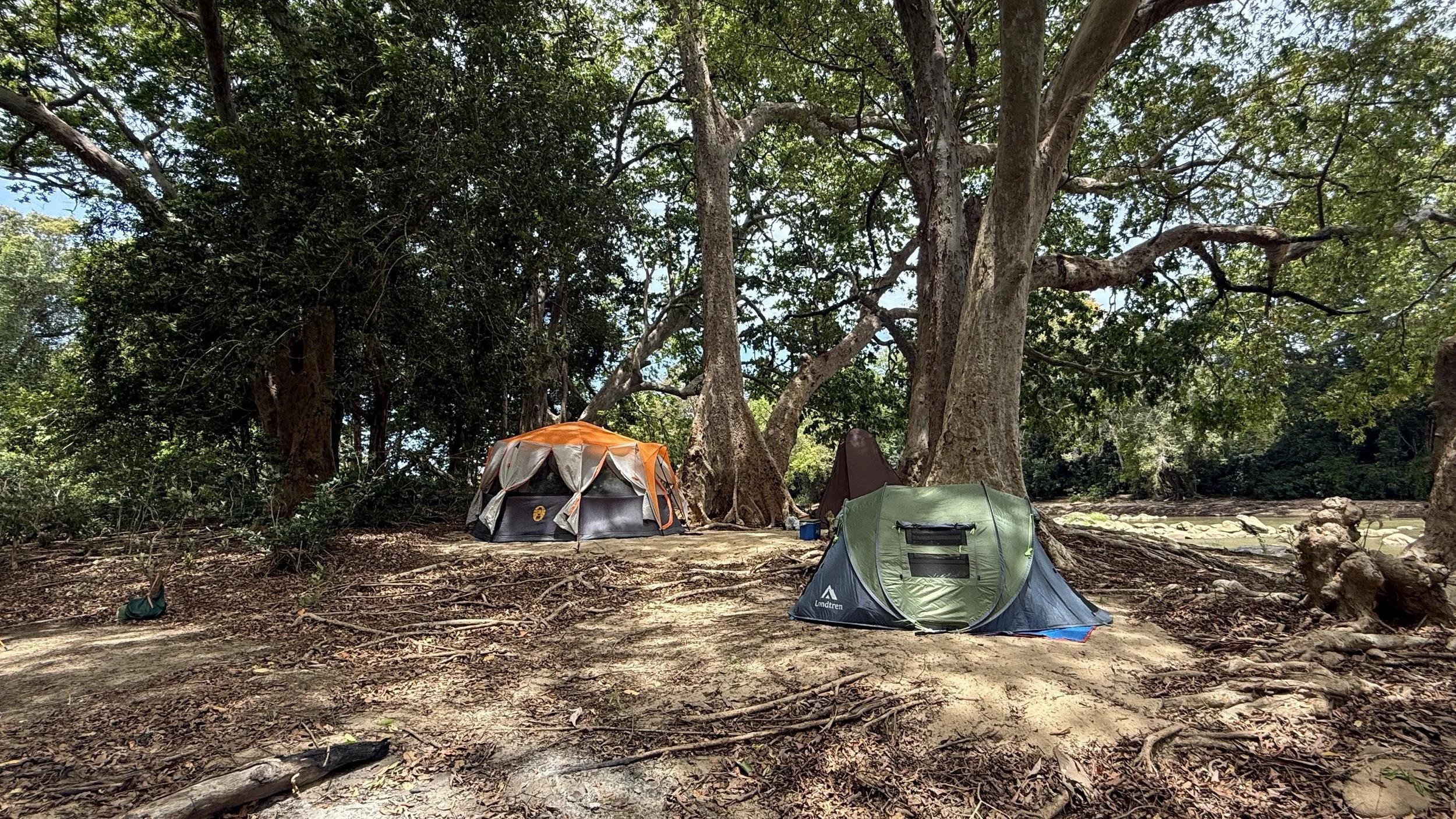
Experienced campers often seem to notice things before anyone else does.
They stand still for a moment. Look around. Say very little. Then somehow, without making it dramatic, they already understand more about the place than a beginner who has been looking at it for five full minutes.
They notice where the ground will hold water.
Which patch of shade will actually matter later.
Where the wind is moving and where it is trapped.
What will feel convenient in daylight but awkward after dark.
Which beautiful-looking area will become irritating once people begin walking through it.
What the land is quietly telling anyone patient enough to read it.
This is not instinct in some mystical sense.
It is pattern recognition.
Attention.
A willingness to pause before acting.
Like most useful outdoor skills, it is far less about toughness than people imagine.
Reading a campsite well does not mean becoming an expert tracker or hardened expedition type. It simply means learning to see a place not only for how it looks in the moment, but for how it is likely to behave once you start living inside it.
That is the real shift.
Beginners often choose a site with their eyes.
More experienced campers choose with their eyes, feet, weather sense, and imagination.
In Sri Lanka, this matters even more than many people first assume. A spot that feels breezy in one moment may become exposed in another. A beautiful patch of open ground may trap heat, hold water, collect dust, or leave you wishing you had thought more carefully about shade, ants, wind, or runoff. The difference between a camp that feels effortless and one that feels faintly annoying all evening is often decided before the first bag is even properly set down.
The good news is that this is a learnable skill.
You do not need years of experience to start.
You only need to stop treating campsite choice as a quick practical formality.
Because a campsite is not only a patch of land.
It is the temporary shape of the life you are about to have there.
What this article will help you understand
If you only have a few minutes, here is the heart of it:
Reading a campsite well means paying attention to the things that affect comfort, safety, and ease before you start setting up. This includes ground, slope, drainage, overhead conditions, wind, sun, movement paths, insects, and how the space will feel after dark — not just how it looks when you first arrive.
A campsite that seems attractive at first glance can still function poorly.
A campsite that looks simple can be excellent if it reads well over time.
The key is to ask:
How will this ground behave?
What changes when light changes?
Where will people move?
Where will water go if it rains?
What will become annoying later if I ignore it now?
Reading a campsite well is not about overthinking.
It is about noticing enough early that the camp feels easier later.
Why beginners often choose with their eyes only
Most people, especially when new to camping, arrive at a potential site and immediately look for what is most visually appealing.
This is entirely understandable.
We are used to evaluating places by their surface qualities. What looks inviting. What feels scenic. What seems beautiful, open, shaded, sheltered, or photogenic. And of course, those things do matter. A place should feel pleasant. But outdoors, what makes a spot look good and what makes it function well are not always the same thing.
This is where beginners often get caught.
A site may have:
A beautiful view but awkward ground
A peaceful-looking tree canopy but poor airflow
An appealing open area but too much heat later in the day
A flat-looking patch that subtly slopes more than it first appears
A clean-looking floor of leaves that hides roots, insects, or runoff concerns
None of this means beginners are careless.
It simply means they are often looking for a campsite the way they would look for a picnic photo, not the way they would choose a temporary outdoor home.
Experienced campers learn that visual appeal is only the first layer of information.
The more important question is:
How will this place behave once we start using it?
That is the question that changes everything.
Start by standing still
One of the easiest ways to make better campsite decisions is also one of the simplest:
Do not start unloading immediately.
Stand still first.
This sounds almost too basic, but it is one of the clearest differences between rushed setup and good field judgment. When people arrive and begin acting instantly, they often commit to a site before they have actually read it. Bags go down. The tent location is mentally chosen. The camp begins taking shape before anyone has truly understood the ground, the space, or what might become inconvenient later.
A short pause changes this.
When you stand still and look without rushing, you begin seeing more:
The shape of the land
How open or enclosed the space really is
Where the wind is moving
What the overhead cover actually looks like
How people will likely move through the area
Where the natural center of the campsite may be
You also give your senses time to adjust. Your eyes notice slope more clearly. Your feet begin reading the ground. Your body often senses exposure or comfort faster than your logical mind does.
In Sri Lanka, where conditions can shift quickly through light, heat, moisture, and breeze, this pause becomes even more useful. The land often tells you what kind of camp it wants to be, but only if you stop long enough to let it.
A good campsite is often not “found” immediately.
It is understood.
Ground tells the truth very quickly
If you want to read a campsite well, start underfoot.
The ground will usually reveal more about future comfort than the horizon will.
What matters here is not only whether a site looks flat, but how it actually feels and behaves:
Is it level enough to rest on comfortably?
Does it feel firm or soft?
Is it dusty, damp, root-heavy, rocky, uneven, or compact?
Does it seem likely to hold water if rain comes?
Will it become messy, slippery, or difficult with repeated movement?
A beginner may see “open space.”
An experienced camper feels:
support,
drainage,
dust,
slope,
and tomorrow morning’s inconvenience.
In Sri Lanka, this matters especially because the ground can shift character so quickly depending on location and season. Dry sites may become dusty and abrasive. Soft-looking sites may hold more dampness than expected. Slight slopes may become much more noticeable once you are trying to sleep or once water needs somewhere to go. A patch of leaf litter may look comfortable, but hide roots or moving life below it.
Good campers do not ask only whether the ground is beautiful.
They ask whether the ground will cooperate.
That one question prevents a remarkable number of problems.
Slope and drainage matter even when the weather is fine
One of the most common beginner mistakes is to think about rain only when rain is already happening.
But good campsite reading looks one step ahead.
Even on a clear day, it is worth asking:
If water came through here, where would it go?
Does this spot collect or shed runoff?
Is the ground slightly lower than the space around it?
Is there a subtle channel or depression I am ignoring because it is currently dry?
This is where slope becomes extremely important.
A slight incline may seem harmless at first, but once you lie down, rest, or move repeatedly through the campsite, what looked “basically flat” may become quietly annoying. More importantly, small changes in ground shape often determine how a place behaves when conditions shift.
In Sri Lanka, where rain can arrive quickly or where the memory of previous rain may still matter even in dry weather, this becomes practical wisdom, not paranoia. A thoughtful camper learns not to trust the immediate surface alone. They read shape, line, and flow.
An experienced eye is often simply an eye that has already learned how expensive it can be to ignore where water wants to go.
Look up as well as down
A campsite is not only what is under your feet.
It is also what is above you.
Beginners often spend most of their attention on finding open ground, then stop there. But overhead conditions can shape a campsite just as much as the floor does. Trees may offer welcome shade, but they also change wind, moisture, leaf fall, and what the space feels like at different times of day.
A good read asks:
Does the overhead cover provide useful shade?
Does it block too much airflow?
Will branches or falling debris become an issue?
Does the space feel calm and protected, or enclosed in a way that may become damp or heavy?
Will the tree cover make this space feel magical at dusk — or darker and less practical too early?
None of this needs to be treated dramatically. It is not about suspicion. It is about realism.
In Sri Lanka, where shade can feel invaluable during the hotter hours, people often gravitate toward tree cover immediately. That instinct is not wrong. But shade that helps in one way can create issues in another if you do not read the full picture: more falling litter, trapped moisture, denser insect presence, or a campsite that never quite dries.
This is one reason good campers do not only choose “under trees” or “out in the open.”
They choose how much cover, what kind, and with what likely trade-offs.
Wind, sun, and air movement shape comfort more than people expect
A campsite can look perfectly fine and still feel wrong because of one thing many beginners overlook:
air movement.
A little breeze can make all the difference in warmth, smoke drift, humidity, comfort during the day, and even how pleasant the evening becomes. Too little airflow, and a site can feel stagnant. Too much exposure, and it can feel unnecessarily open, uncomfortable, or harder to manage once the weather changes.
Experienced campers often read this quickly.
They notice:
Where the breeze naturally passes through
Where the air feels trapped
How the surrounding trees or terrain shape that movement
Whether the current wind is likely helping or will become annoying once the camp is established
The same goes for sun.
The place that feels soft and beautiful in late afternoon may become harshly exposed by mid-morning if the shade line shifts. The “bright and cheerful” patch may be the exact place you regret choosing once the heat settles in.
In Sri Lanka, where the sun can shape energy, comfort, and camp rhythm very strongly, reading light matters a great deal. A site that works only in one short slice of the day is not necessarily a good site. A good campsite is one that keeps making sense as the sun moves, the air changes, and the day begins asking different things of the space.
Movement paths reveal future frustration
One of the easiest ways to tell whether a campsite will feel smooth or awkward is to imagine how people will move through it.
This is something experienced campers do almost automatically.
Before the camp is even built, they are already seeing:
Where people will walk
Where bags might end up
How the sleeping area connects to the shared area
Whether anyone will keep cutting through the same inconvenient corner
Which object will become a nuisance after dark if placed carelessly
This is practical foresight, and it matters a great deal.
A campsite can look fine in stillness and yet become frustrating once real use begins. Suddenly:
The tent is in the way of the natural path
The shared area feels too disconnected
Something important is constantly being stepped around
People keep crossing where they should not
Night movement becomes awkward because the layout was never thought through
All of this can be avoided if the space is read not only as land, but as future movement.
A well-read campsite has a kind of quiet logic to it. People move naturally. They do not need constant instruction. The layout simply makes sense.
That is one of the surest signs the site was chosen well.
Small signs matter: ants, tracks, roots, and the overlooked clues
A beginner often looks for the big obvious features.
A more experienced camper also looks for the small clues.
These may seem minor at first, but they often reveal exactly what the campsite will feel like later:
Ant movement or insect concentration
Roots hidden under soft ground
Fresh tracks or signs of regular movement
Heavily used animal paths
Low branches at inconvenient heights
Persistent leaf fall
Patches of disturbed soil
The subtle evidence that the place is more active than it first appeared
None of these signs automatically disqualify a site. But they should be read, not ignored.
In Sri Lanka, where life often makes itself known in small, practical signs, this kind of attention is especially valuable. A few minutes of noticing can spare a great deal of mild frustration later.
This is what “experience” often really is:
not mystery,
not bravado,
but simply learning to care about the small clues before they become bigger problems.
A good campsite should make more sense at night, not less
A final test of a well-read site is simple:
Will this place still work once the light goes?
This is where many beginner choices reveal their weakness.
A site that feels acceptable in daylight may become awkward, confusing, or mildly frustrating after dark if it was chosen without enough thought. A path that seemed obvious becomes unclear. A bag becomes an obstacle. An overexposed edge feels less pleasant. The site’s center no longer feels intuitive. Something important becomes harder to reach than it should be.
A well-read campsite avoids much of this because it was chosen with the evening in mind.
The best sites tend to:
Hold a clear center
Allow easy movement
Keep practical areas coherent
Feel understandable even in low light
Reduce unnecessary stumbling, searching, or guesswork
The real skill here is not “picking the perfect place.”
It is picking a place that continues making sense as the conditions change.
And that is where campsite reading starts becoming real fieldcraft.
What people often get wrong
A few common mistakes make beginners choose campsites that feel harder than they need to:
1. Choosing only by appearance
A site can be beautiful and still function badly.
2. Starting setup too quickly
Once bags go down, people often stop reading the site properly.
3. Ignoring slope because it seems minor
Small gradients become much more noticeable later.
4. Forgetting to think about night
A site that works only in daylight has not been read well enough.
5. Overlooking small clues
Roots, ants, movement paths, and airflow often matter more than first-timers expect.
First time choosing a campsite? Start here
If you want to read a site more like someone with experience:
Stand still before unloading
Read the ground first
Think about slope and drainage
Look up as well as down
Notice airflow and sun direction
Imagine how people will move
Pay attention to small practical clues
Ask whether the site will still make sense after dark
You do not need to become obsessive.
You only need to give the place enough attention that it can tell you the truth before you commit to it.
What this skill really gives you
Reading a campsite well gives you more than convenience.
It gives you a kind of quiet confidence.
You begin noticing how places behave, not only how they appear. You start preventing discomfort before it begins. You make camps that feel calmer, more coherent, and more natural to live in. And over time, the outdoors begin feeling less like random terrain and more like something readable.
That is one of the deepest shifts in camping.
The land stops being “out there.”
It starts becoming something you know how to meet properly.
A gentle closing thought
A good campsite rarely shouts its advantages.
It simply keeps proving itself as the hours pass.
The ground behaves well.
The breeze helps.
The light makes sense.
The movement flows.
The evening feels easier than it might have been.
That is the quiet reward of reading a site properly.
In Sri Lanka, where land, weather, shade, moisture, and living signs all speak at once if you are willing to notice them, this skill can make the difference between a campsite that merely works — and one that feels, from the very first evening, like it was chosen with wisdom.