
Camping During Rain in Sri Lanka: What Changes, What Matters, and What Becomes Beautiful
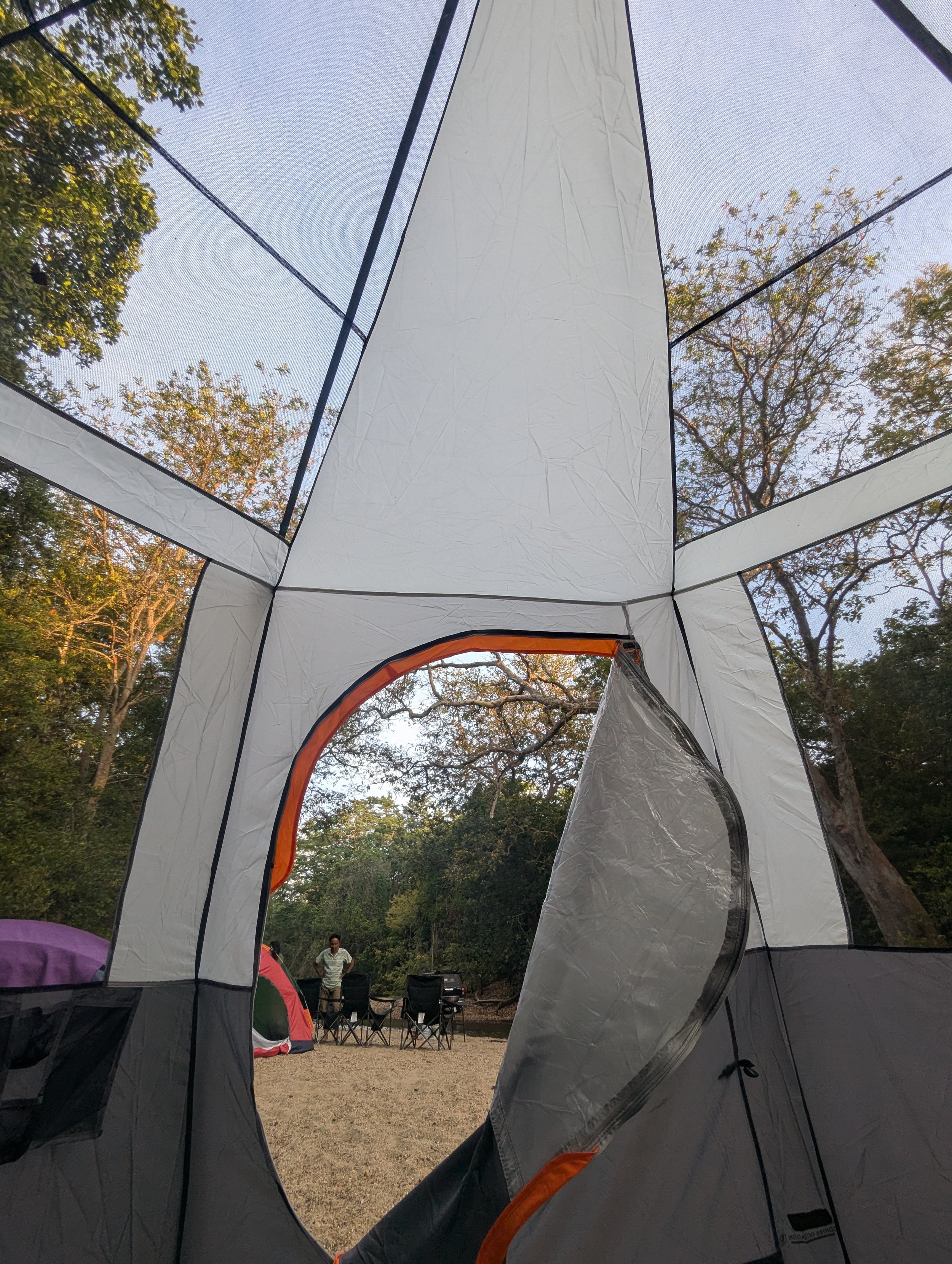
Rain has a way of revealing what kind of camper you are.
Not because it tests you in some dramatic, heroic sense. Not because every wet day becomes an ordeal.
But because rain strips away a certain illusion many people carry about camping — the idea that the outdoors are enjoyable only when they are dry, convenient, and behaving exactly as hoped.
For first-time campers, rain is often imagined as the thing that might “ruin” the trip.
The mind quickly jumps to wet bags, muddy ground, damp clothing, discomfort, inconvenience, and a campsite that suddenly feels harder to live in.
Indoors, rain is usually something watched through glass. Outdoors, it becomes part of the environment you are actually inside.
In Sri Lanka, where rain can arrive with texture, mood, and force, that shift can feel very immediate.
But here is the quieter truth:
Rain changes camp. It does not automatically diminish it.
A rainy camp is not the same as a dry one. The sounds are different. The ground behaves differently. The air changes. The pace changes.
Certain comforts matter more. Certain habits become more important. Some plans may soften or shift.
But if the camp is approached well, rain often brings something surprisingly rich in return.
The atmosphere deepens.
The senses sharpen.
Warmth becomes more meaningful.
Simple organization becomes a form of comfort.
The group often gathers more closely.
The place itself can feel more alive, more fragrant, more intimate than it did in dry weather.
In Sri Lanka, where rain is not merely weather but part of the island’s rhythm, camping in the wet can carry its own kind of beauty.
Leaves darken. Earth wakes up. Air cools. Bird activity changes. Sound gathers differently. A simple cup of something warm can feel almost ceremonial when everything around it is softened by rain.
The key is not pretending rain is ideal in every moment.
The key is understanding what changes, responding well, and allowing the experience to become something other than the dry-weather version you originally imagined.
What this article will help you understand
If you only have a few minutes, here is the heart of it:
Camping in the rain in Sri Lanka can still be deeply enjoyable, but it asks for a different mindset and slightly different priorities.
The goal is not to fight the rain or resent the changes it brings. It is to manage the practical realities well enough that you can still receive the beauty and atmosphere that wet weather offers.
When it rains, what matters most becomes clearer:
Keeping essential things dry
Staying organized
Dressing sensibly
Adjusting expectations
Protecting the mood of the group
Letting comfort come from warmth, rhythm, and simplicity
Rain often magnifies both good habits and poor ones.
A well-managed rainy camp can feel memorable, intimate, and unexpectedly beautiful.
A disorganized one can feel harder than it needs to.
What makes the difference is rarely the rain itself.
It is how calmly and thoughtfully the camp responds to it.
Why people fear rain in camp before they have experienced it
For many beginners, rain represents the moment camping stops looking romantic and starts looking inconvenient.
It interrupts the imagined picture of the trip. Instead of glowing firelight, easy movement, and dry seating, the mind jumps to soggy clothing, wet ground, muddy feet, and plans falling apart. The possibility of rain can make people feel as though the trip is now somehow less legitimate or less enjoyable before it has even begun.
This is a very normal reaction.
Much of modern life is built around minimizing direct contact with weather. We move from building to vehicle to room.
We experience rain as something to avoid, bypass, or watch from shelter. So when we imagine being outdoors in it, it can feel like stepping into unnecessary discomfort.
But rain in camp is not the same as being caught unprepared in bad weather.
That distinction matters.
A campsite is not meant to erase weather. It is meant to help you live within it more intelligently.
When a rainy camp is handled well, the experience often becomes far less chaotic than people fear. In many cases, what feels stressful in imagination becomes manageable in practice once the camp is organized, sheltered, and moving at the right pace.
There is also another truth hidden underneath the anxiety:
People are often not afraid of the rain itself.
They are afraid of feeling unprepared inside it.
That is good news, because preparation and good camp rhythm are exactly what make rain feel less intimidating.
Rain changes the rules, but not the value of the trip
One of the most helpful mindset shifts for rainy camping is this:
Rain changes the rules. It does not erase the value.
A dry camp and a rainy camp are simply not the same experience. The atmosphere changes. The pace changes. The practical priorities change.
You may move less. You may gather more tightly. The meal may feel more important. Shelter becomes more central.
You may pay more attention to where things are placed, how clothing is managed, and what needs to stay dry.
These are real changes. But change is not the same as loss.
In fact, some of the most memorable camps are memorable precisely because the weather asked everyone to become a little more attentive, a little more adaptable, and a little more appreciative of simple comforts. Rain often makes people notice things they would otherwise take for granted:
a dry place to sit,
a warm drink,
a dry layer,
a sheltered conversation,
the sound of water on fabric,
the smell of wet earth,
the relief of being organized.
This is especially true in Sri Lanka, where rain often carries not just inconvenience but atmosphere.
The land responds quickly. The color deepens. Dust settles. Leaves shine. Air changes texture. Even the emotional feel of the place can soften.
If the group can let go of the idea that the trip must remain the exact dry-weather version they expected, rain often reveals a different kind of richness.
In Sri Lanka, rain changes the whole sensory world
Rain on this island is rarely a small, abstract thing.
Even a brief spell can change the feel of a place almost immediately. The smell of dry earth lifting into something richer. The sudden coolness after heat.
The way leaves darken and begin holding light differently. The shift in sound as rain replaces open-air stillness with a layered wash of movement.
For campers, this can be one of the most striking parts of the experience.
The world becomes more intimate.
In dry conditions, the outdoors often feel spacious, open, and spread out.
In rain, they often feel closer. Sound gathers. Shelter matters more. Attention narrows slightly, but deepens.
You stop taking openness for granted and begin appreciating enclosure in a different way — not walls, but temporary protection, shared space, a good tarp, a dry seat, a small circle of warmth holding its own against the wet.
There is also something culturally familiar in this rhythm. In Sri Lanka, rain has always been more than just background weather. It shapes harvests, roads, routines, moods, and memory. People know the feeling of watching land transform in rain, of adjusting the day around it, of understanding that some things are not interrupted by weather so much as redefined by it.
Camping can learn from that same attitude.
Not resistance. Not resignation. Adjustment.
And once you begin seeing rain as part of the life of the place rather than the enemy of your plans, the whole experience becomes easier to receive.
What matters most when camp gets wet
Rain tends to simplify priorities very quickly.
Things that seemed minor in dry weather suddenly become central. Comfort begins depending less on abundance and more on small, sensible decisions made well.
A few things matter far more once the rain begins:
1. Keeping the truly important things dry
Not everything needs to be protected equally. What matters most is keeping essentials dry: clothing that must be worn later, sleeping items, necessary personal items, and anything whose dampness would affect safety or real comfort.
2. Keeping the camp orderly
Disorder feels much harder in rain. A cluttered campsite quickly becomes frustrating when everyone is trying to move around wet ground, manage damp items, and find what they need without unnecessary confusion.
3. Managing yourself before discomfort escalates
A wet sleeve, cold hands, muddy feet, or damp clothing can feel like a small issue at first and then quietly lower the whole mood if ignored too long. In rain, small adjustments made early make a big difference.
4. Letting shelter become the center
In rainy conditions, the life of camp often gathers more tightly around protected space. That is not a limitation. It is simply where the camp’s social and practical energy moves.
5. Protecting morale
This may be the least discussed and most important part. When people treat the weather as a disaster, the atmosphere collapses far faster than the campsite does. Calmness, humor, and good timing matter enormously.
Rain does not demand perfection. But it does reward competence.
Good rainy camp habits create most of the comfort
One of the most reassuring truths about camping in rain is that comfort often depends less on dramatic solutions and more on simple habits repeated consistently.
This is where a good camp shows its quality.
When the weather shifts, the best response is usually not panic or endless rearranging. It is steady competence:
Putting things where they belong
Keeping movement sensible
Avoiding unnecessary exposure of dry items
Changing what needs changing before it becomes a bigger issue
Maintaining an easy, functional rhythm
Rain has a way of exposing whether a campsite has been set up thoughtfully. If the camp has clear spaces, sensible placement, and enough attention to shelter and flow, people settle into the wet more easily. If the camp is disorganized, every small task becomes harder.
This is why setup matters even more in uncertain weather. The rain does not create all the problems. Often, it simply reveals which ones were already waiting to happen.
But the reverse is also true: when good habits are in place, a rainy camp can feel remarkably manageable.
The experience may be wetter and slower, yes. But it need not feel chaotic.
When people begin noticing that the camp is functioning well despite the rain, confidence rises quickly.
Mood matters more than people realize
Weather affects atmosphere, but group mood shapes whether that atmosphere becomes memorable or miserable.
This is especially true with rain.
The same wet conditions can feel deeply charming to one group and deeply draining to another, often not because the rain itself was different, but because the group related to it differently. If everyone is resenting what the weather has changed, even small inconveniences feel magnified. If the group accepts that the day has simply taken on a different character, the mood stays much more intact.
This does not mean forced positivity.
No one needs to pretend that wet clothes are delightful or that mud is always convenient. But there is a huge difference between acknowledging that the weather has changed the day and deciding that the day is therefore spoiled.
One of the easiest ways to protect morale is to shift attention toward what still works:
A dry sitting space
A warm drink
Food at the right moment
The beauty of the soundscape
The intimacy of a smaller gathering circle
The comfort of having handled the practical parts well
Rain tends to make warmth more meaningful, shelter more appreciated, and shared calm more noticeable.
Sometimes the trip becomes more memorable not because everything went according to plan, but because everyone adapted together.
Rain often makes warmth feel more precious
There are few pleasures in camp as quietly satisfying as warmth after dampness.
A dry layer.
A warm drink.
A sheltered seat.
Food at the right moment.
The relief of no longer needing to think about the rain for a while.
These things can feel almost ordinary in dry weather. In rain, they become deeply felt.
This is one reason rainy camps often leave such strong memories. Weather sharpens contrast. It makes comfort more visible.
A cup of tea or a warm meal does not just taste good — it restores the body’s sense of ease.
A protected space does not just function — it becomes a little center of gravity. Shared warmth becomes emotional as much as physical.
In Sri Lanka, this feeling can be especially lovely after a humid or hot day has been broken by rain.
The cooling air changes appetite. Steam from food or drink feels more present. Conversation under shelter takes on a slower, closer tone.
Even silence becomes richer when the rain is doing some of the holding.
This is one of the great hidden gifts of wet weather in camp:
it makes simple comfort feel unmistakably valuable.
Rain can make the place more beautiful, not less
For all the practical adjustments rain asks for, it also gives something back.
Often, it gives a different kind of beauty than the one people expected.
Dry landscapes can feel clear, open, and easy to read. Rainy landscapes often feel softened, deepened, and more alive in texture.
Leaves darken into richer greens. Dust settles. Bark looks fuller. The smell of soil rises. Light becomes gentler and more diffused.
Sound wraps itself differently around the camp. Mist, moisture, and shade all begin shaping the atmosphere in subtler ways.
In Sri Lanka, where so much of the natural world responds visibly to moisture, rain can make even a familiar place feel transformed.
This is not always the obvious, picturesque beauty people initially imagine when planning a trip. It is often quieter than that. Moodier. More intimate.
More felt than photographed. The beauty of rain in camp is not usually in one dramatic visual moment. It is in the whole environment becoming more textured, more fragrant, more alive.
For people willing to slow down and receive that, a rainy campsite can become unforgettable.
Not in spite of the weather- Because of it.
What people often get wrong
A few common misunderstandings make rainy camping harder than it needs to be:
1. Assuming rain automatically ruins camp
Rain changes the experience, but it does not automatically make it bad.
2. Letting small wet inconveniences become emotional collapse
Wet weather can be managed much better when small issues are addressed early and calmly.
3. Treating dry-weather expectations as the standard
A rainy trip needs to be allowed to become its own version of the experience.
4. Underestimating the importance of order
Good organization matters far more once things get wet.
5. Forgetting that mood is part of comfort
A calm, adaptable group often feels far more comfortable than a resentful one in the same conditions.
First time camping in the rain? Start here
If you are new to rainy camping in Sri Lanka, keep the mindset simple:
Accept that the day has changed shape
Protect the things that truly need to stay dry
Keep the campsite orderly
Make small adjustments early
Gather around shelter, warmth, and rhythm
Let go of the need for the trip to look exactly as imagined
Allow rain to be part of the place, not an interruption to it
You do not need to love every wet moment.
You only need to meet the weather well enough that it stops feeling like the enemy.
What a rainy camp can leave you with
A well-handled rainy camp often leaves people with more than a story about weather.
It leaves them with a new relationship to the outdoors.
A little more adaptability.
A little more trust.
A little more respect for small practical habits.
A stronger appreciation for warmth, order, and shared shelter.
A clearer sense that the wild does not need to be convenient to be beautiful.
Often, once people have had one genuinely good experience camping in rain, something shifts.
They stop seeing weather only as a condition that must cooperate for outdoor life to be worthwhile.
They begin understanding that part of the depth of being outdoors is learning how different weather changes the character of the same place.
That is where camping becomes richer.
A gentle closing thought
Rain does not ask camp to become perfect.
It asks it to become thoughtful.
To shelter what matters.
To simplify.
To slow down a little.
To gather more closely.
To find warmth where warmth is needed.
To let the place become wetter, darker, softer, and more alive without immediately calling that a problem.
In Sri Lanka, where rain has always been part of the island’s language — shaping soil, memory, mood, and season — camping in the wet can feel less like something has gone wrong and more like the land is speaking in a different tone.
If you listen well, it can be a beautiful one.