
Leave No Trace, Sri Lankan Style: How to Camp Without Disturbing the Wild
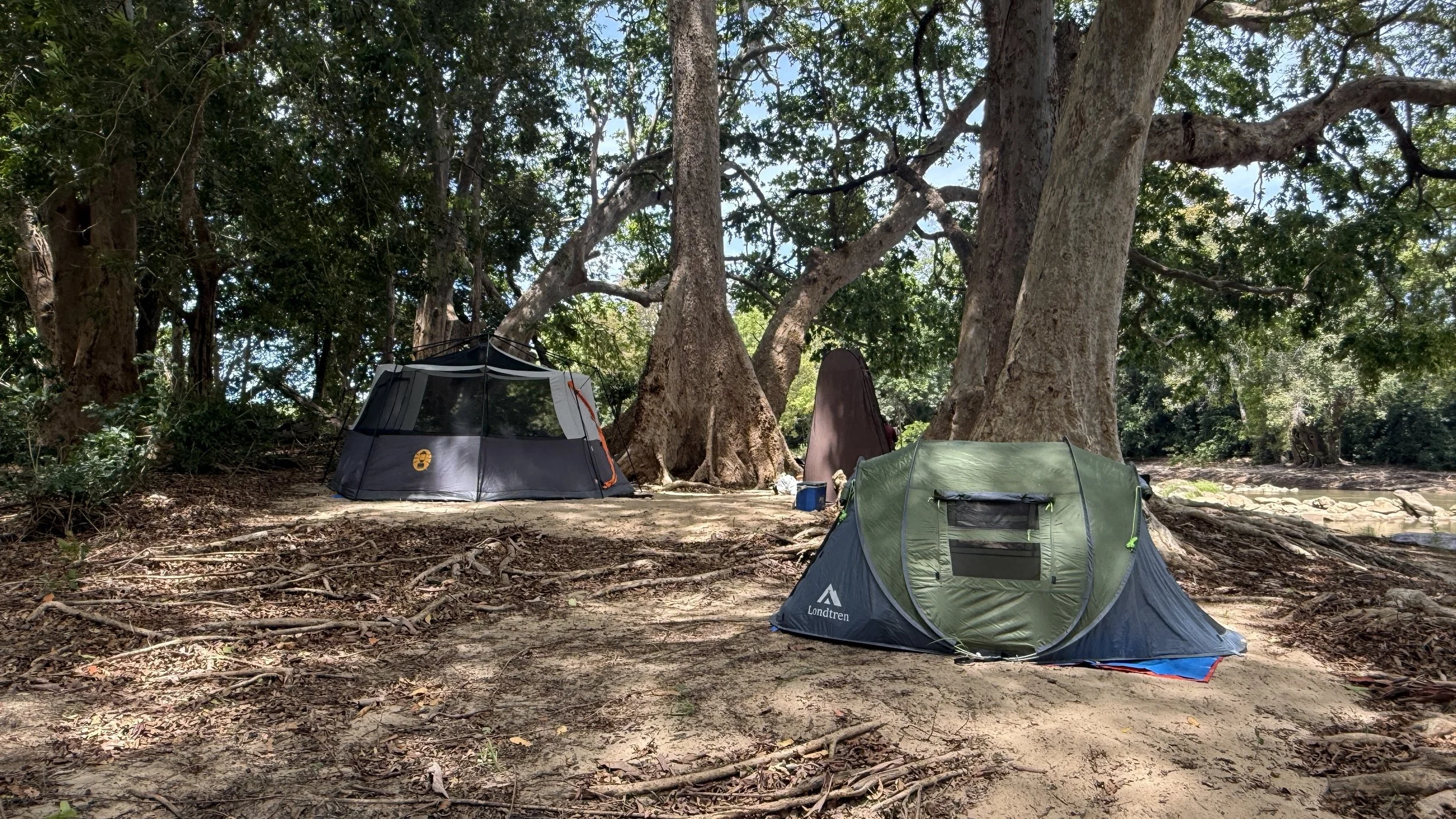
A campsite always remembers something.
Even after the tents come down, even after the fire is out, even after the voices leave and the last bag is loaded, a place will often hold the shape of how it was treated. Sometimes that memory is obvious — litter, disturbed ground, food scraps, damaged branches, careless signs of people who used a wild place as though it were disposable. Other times, the memory is quieter: a campsite left cleaner than it was found, a fire area handled properly, no stray packaging, no food left to draw wildlife, no sense that the land had to absorb the cost of someone else’s convenience.
This is one of the clearest measures of good camping.
Not how dramatic the destination was. Not how beautiful the photographs looked. Not how “wild” the trip felt.
But whether the place was respected enough that it did not have to pay for your being there.
This matters everywhere, of course. But it matters in a particular way in Sri Lanka, where natural spaces are both deeply alive and increasingly pressured. Forest edges, riverbanks, scrubland, open dry zones, wetlands, and wildlife-rich areas are not empty backdrops for human experience. They are living systems — often fragile, often shared, and often affected by the small, cumulative habits of the people who pass through them.
One careless camper may not think they have done much harm.
One piece of litter.
One food scrap tossed aside.
One noisy evening.
One bit of “it will be fine.”
The wild remembers patterns. Patterns are what shape places over time.
That is why good camping must be about more than simply enjoying nature.
It must also be about how we leave it.
“Leave No Trace” is a useful phrase, but it can sound abstract when treated like a slogan. In reality, it is something much more practical, much more human, and much more immediate than that. It is not about perfection. It is about behavior. It is about reducing harm, carrying responsibility, and understanding that the privilege of being close to the outdoors comes with the obligation not to leave the place poorer for your visit.
When approached in a grounded, local way — in a Sri Lankan way, with simplicity, decency, and respect for shared land — this ethic becomes not a performance, but a very natural part of how camp should feel.
What this article will help you understand
If you only have a few minutes, here is the heart of it:
Leave No Trace is not only about picking up rubbish. It is about camping in a way that reduces disturbance, avoids careless damage, respects wildlife, and ensures the place is not left worse than it was found. In Sri Lanka, this means paying attention to practical things like waste, food handling, noise, water edges, fire use, and the simple discipline of leaving a campsite properly.
A respectful campsite should aim to:
Leave no litter
Leave no food scraps
Avoid unnecessary damage to the ground or vegetation
Avoid drawing wildlife into human mess
Reduce noise and disruption
Leave the site cleaner, calmer, and less burdened than careless campers would have
This does not require fancy gear or moral posturing.
It requires something much simpler:
Attention,
Restraint,
The willingness to do the ordinary responsible things even when no one is watching.
Good outdoor ethics are often built in very small habits.
Why this matters more than ever
Many people say they love nature.
Far fewer understand how easily love becomes pressure when it is careless.
This is one of the uncomfortable truths of outdoor culture. Wild places are often damaged not only by hostility, but by affection without discipline — people wanting closeness, enjoyment, freedom, and a memorable time outdoors, yet behaving as though the land exists to absorb every consequence of that desire.
Over time, the damage is cumulative.
A wrapper left behind becomes many.
A food scrap left out teaches wildlife to associate human spaces with reward.
Repeated trampling creates new paths where none were needed.
Improper fires scar ground and risk larger harm.
Noise changes the character of a place even when nothing visible is left behind.
In Sri Lanka, where many natural spaces are under pressure from development, traffic, waste, and inconsistent public care, the behavior of campers matters enormously. When people treat a campsite properly, they are doing more than avoiding mess. They are helping preserve the emotional and ecological quality of that place — for wildlife, for the next visitors, and for the land itself.
This is especially important in places where beauty can make people forget fragility.
A lovely patch of land is not automatically resilient simply because it looks abundant. Often, the places that feel most alive are precisely the places most easily diminished by repeated human carelessness.
Leave No Trace, then, is not some imported outdoor phrase to be repeated because it sounds responsible.
It is a practical ethic of restraint.
A way of saying:
We were here, but we did not behave as though here belonged only to us.
Litter is the most obvious problem — but not the only one
When people think about responsible camping, the first thing they usually think of is rubbish.
That makes sense. Litter is visible, immediate, and one of the clearest signs of disrespect in the outdoors.
A plastic bottle, food wrapper, tissue, cigarette end, can, or any stray packaging left in a natural place does not simply look bad. It tells the land that human convenience mattered more than human responsibility.
So yes — taking all rubbish out with you is basic and non-negotiable. But if we stop the conversation there, we miss something important.
A place can be left “without litter” and still be treated badly.
This is because the outdoors can be disturbed in ways that are less obvious but still harmful:
Food scraps left behind
Unnecessary trampling
Poorly managed fires
Cutting or damaging vegetation
Loud, intrusive camp behavior
Careless washing or waste near water
Clutter that spreads into the natural area
Attracting wildlife with human food and scent
In other words, litter is the clearest visible sign, but not the whole ethic.
A campsite can be clean-looking and still careless. A campsite can be simple and still deeply respectful.
The real goal is not merely to avoid visible mess. It is to avoid leaving behind the consequences of thoughtless living.
Waste should never become the land’s problem
One of the simplest and most important principles of good camping is this: If you brought it in, you should know exactly how it leaves.
This applies to all ordinary waste, but also to the smaller, more easily ignored things people are tempted to treat casually outdoors: tissues, food wrappers, fruit peels, bottles, leftovers, cigarette butts, wipes, and all the other bits and pieces that sometimes get mentally categorized as “small enough not to matter.”
They matter.
The outdoors are not an invisible bin.
“It will break down” is not an excuse for careless disposal, especially in places where repeated human use multiplies the effect.
In Sri Lanka, this matters acutely. Heat, rain, insects, and wildlife all interact with waste in ways that can spread the impact beyond the original item.
A single thing left behind may be found, scattered, consumed, or moved in ways that affect both the ecology and the character of the site.
Waste discipline is one of the easiest places to tell whether a camp is thoughtful.
A good camp knows where waste is going from the moment it is created.
It does not let trash build casually.
It does not “deal with it later” in vague ways.
It treats the final condition of the campsite as something being shaped in real time.
This kind of discipline is not glamorous.
But it is one of the strongest signs of respect.
Food scraps are not harmless
This is one area where many people behave carelessly without realizing the full consequence.
A leftover bit of food can seem harmless. It is “natural,” they think. It will decompose. Animals will eat it. What is the issue?
But camping ethics are not only about whether something eventually breaks down.
They are about whether human presence is changing the behavior and balance of the place in avoidable ways.
Food scraps can:
Attract wildlife toward human-used areas
Teach animals to seek food near camps
Create scent patterns that alter how a site is used
Encourage scavenging behavior
Reduce the healthy separation between wild animals and human food systems
Even something as seemingly small as a fruit peel, a leftover morsel, or an uneaten piece of a meal can become part of a larger pattern of human influence if this habit is repeated by many people over time.
This is why “never feed wildlife” also extends to “do not casually leave food behind for the land to deal with.”
A campsite should not become a buffet of human leftovers.
In Sri Lanka, where camps may exist near rich wildlife zones, this matters even more. The right relationship with wildlife is one of respectful distance, not accidental encouragement. Food should be managed, contained, and removed or disposed of properly according to the setup — not scattered into the surrounding environment as though the place exists to clean up after you.
Noise leaves a trace too
Not all traces are visible.
One of the most overlooked forms of impact in the outdoors is noise.
People often think of environmental care only in terms of what can be seen: trash, damage, fire scars, trampled plants. But the sound a group brings into a wild place also changes the experience of that place — for wildlife, for other campers, and for the very atmosphere people came to enjoy in the first place.
Excessive noise does several things at once.
It disrupts the emotional quality of the place.
It disturbs the sense of calm or natural rhythm.
It can alter how wildlife use nearby space.
And it often reveals a mindset that treats the outdoors as a private stage rather than a shared living environment.
This does not mean camping must be silent.
Laughter belongs in camp.
Conversation belongs in camp.
Children belong in camp.
Shared joy belongs in camp.
But there is a difference between life and intrusion.
The point is not to remove human warmth from the experience. It is to avoid imposing human volume on the land in ways that flatten everything else.
A camp should feel as though it belongs respectfully within the place — not as though it has temporarily replaced the place with its own noise.
In Sri Lanka, where night sounds, birds, wind, insects, and subtle movement are part of the entire richness of being outdoors, unnecessary human noise does more than disturb peace. It drowns out the very life people often came there to experience.
A noisy camp may leave no litter. But it still leaves a trace.
Water edges deserve extra care
Rivers, streams, lakes, tanks, wetlands, and water-adjacent spaces often draw people naturally in camp.
They are beautiful, cooling, useful, and often central to the feel of a place. But they are also areas where careless human habits can cause disproportionate harm.
What seems like a small action near water can spread more quickly and affect more than people realize.
This is why camps near water should be handled with extra discipline.
The basic principle is simple:
Do not turn water’s edge into a place for careless disposal, careless washing, or casual contamination.
That means avoiding:
Leaving food waste near water
Letting soap, chemicals, or unnecessary runoff enter the area
Treating nearby ground as a dumping point
Creating extra disturbance through messy camp sprawl
Water attracts life.
Because of that, it deserves a cleaner relationship from us, not a messier one.
In Sri Lanka, where water bodies are often part of delicate local ecosystems and may also matter to nearby communities, animals, or seasonal ecological balance, this responsibility becomes even more important. Good camping should never assume that because a place is outdoors, it can absorb anything.
A clean, respectful distance and careful behavior near water are part of what separates ethical camping from merely convenient camping.
Fire should be treated with maturity
Few things feel more deeply connected to camp than fire.
Warmth, light, cooking, conversation, the quiet center of an evening — fire can make a campsite feel alive in a special way.
But precisely because it is so central and so attractive, it is one of the areas where careless behavior can do the most damage.
A mature relationship with fire means understanding that it is not only atmosphere.
It is responsibility.
That includes:
Uusing fire only where appropriate
Keeping it controlled and sensible
Not treating it casually because “it looks fine”
Being mindful of surrounding ground, vegetation, and conditions
Ensuring the site is properly handled afterward
An improperly managed fire can scar the land, damage roots, create unnecessary ash spread, leave behind debris, or in the worst cases, risk something far more serious. Even when no bigger danger results, the mark left behind may remain long after the camp is gone.
In Sri Lanka, where conditions can vary sharply between dry and wet, wooded and open, sheltered and exposed, fire should never be approached with assumption.
The right choice is not always to have one simply because a campfire feels traditional or picturesque.
A respectful camper does not ask only:
Would a fire be nice?
They also ask:
Is it appropriate here?
Can it be managed properly?
Can this place be left well afterward?
That is the difference between enjoying fire and using it maturely.
A respectful campsite should feel cleaner when you leave
One of the best practical standards for ethical camping is stronger than “leave no mess.”
It is this:
Leave the campsite better than you found it.
This does not need to mean some grand restoration project. It means a simple and meaningful level of care.
If there was a bit of visible litter already there, remove it if you safely can. If an area can be left tidier, leave it tidier.
If the campsite can be walked away from in a cleaner, calmer state than it was found, that should be the aim.
This shift matters because it turns outdoor ethics from a minimum standard into a positive one.
Not:
We did not make it worse.
But:
We helped leave it better.
That attitude carries a different energy. It is no longer only about avoiding guilt. It is about active respect.
In Sri Lanka, where many beautiful places suffer not from the absence of appreciation but from the absence of enough responsible behavior, this standard can have real meaning. The more people who treat campsites this way, the more those places remain viable, dignified, and enjoyable over time.
A clean campsite after departure is not only a technical success.
It is a sign that the group understood the relationship properly.
Children learn ethics best when they can see them practiced
If you are camping with children, this is one of the most valuable lessons the outdoors can offer.
Not because children need a lecture on sustainability in the middle of camp, but because they learn most deeply from what they see adults do consistently.
When children see adults:
Pack out every bit of waste
Refuse to leave food behind
Tidy shared spaces properly
Speak with respect about the land
Keep noise measured
Handle fire carefully
Leave a place cleaner than it was found
…they absorb more than rules.
They absorb a way of being in nature.
This matters enormously. Many children are introduced to the outdoors through family habits, and the ethical tone of those early experiences can stay with them for years.
If the outdoors are treated as a place where normal standards dissolve, that lesson stays. If the outdoors are treated as a place that deserves even more care than home, that lesson stays too.
Camping gives families the chance to teach environmental responsibility not as theory, but as practice. Practice is what builds character.
What people often get wrong
A few common assumptions weaken outdoor ethics without people noticing:
1. Thinking “no litter” is the whole standard
It is a basic standard, but not the whole one. Food, noise, fire, damage, and disturbance matter too.
2. Treating food scraps as natural and therefore harmless
Human leftovers still alter the behavior and ecology of a place.
3. Assuming the land can absorb small carelessness
Small careless acts become large patterns when repeated by many people.
4. Believing that visible cleanliness equals ethical behavior
A camp can look tidy and still be disruptive, noisy, or careless in other ways.
5. Treating Leave No Trace like a slogan instead of a habit
It only matters when it is built into real behavior.
First time camping? Start here
If this is new to you, begin with a very simple ethic:
Take out everything you bring in
Leave no food scraps behind
Keep the campsite orderly as you go
Respect wildlife by not feeding or attracting them
Keep noise appropriate to the place
Handle fire carefully and only where proper
Be extra careful near water
Leave the site cleaner than you found it if you can
You do not need perfection. You need care strong enough that the place does not have to absorb your carelessness.
What good camping ethics really give back
At first glance, Leave No Trace may seem like a set of restrictions.
But in truth, it gives something back.
It preserves the dignity of the place.
It protects wildlife from unnecessary human influence.
It makes the next visitor’s experience better.
It makes your own camp feel more intentional and respectful.
And perhaps most importantly, it changes your relationship with the outdoors.
You stop treating nature as something to consume.
You begin relating to it as something you are temporarily in relationship with.
That shift is quiet, but profound.
Once you feel it, many careless habits stop making sense.
A gentle closing thought
A wild place should not have to recover from your visit.
That may be one of the simplest tests of good camping.
Not whether the trip was beautiful.
Not whether it was memorable.
But whether the place itself was burdened by your presence — or respected enough to remain itself after you were gone.
In Sri Lanka, where land, water, weather, and wildlife still shape life in intimate ways, this kind of respect is not only good outdoor practice.
It is a form of decency.
A way of saying:
we came here with gratitude,
we used this place with care,
and when we left,
we did not ask the wild to clean up after us.
That is what good camping should feel like.