
Birdsong, Footprints, and Falling Leaves: Noticing the Living World Around Camp
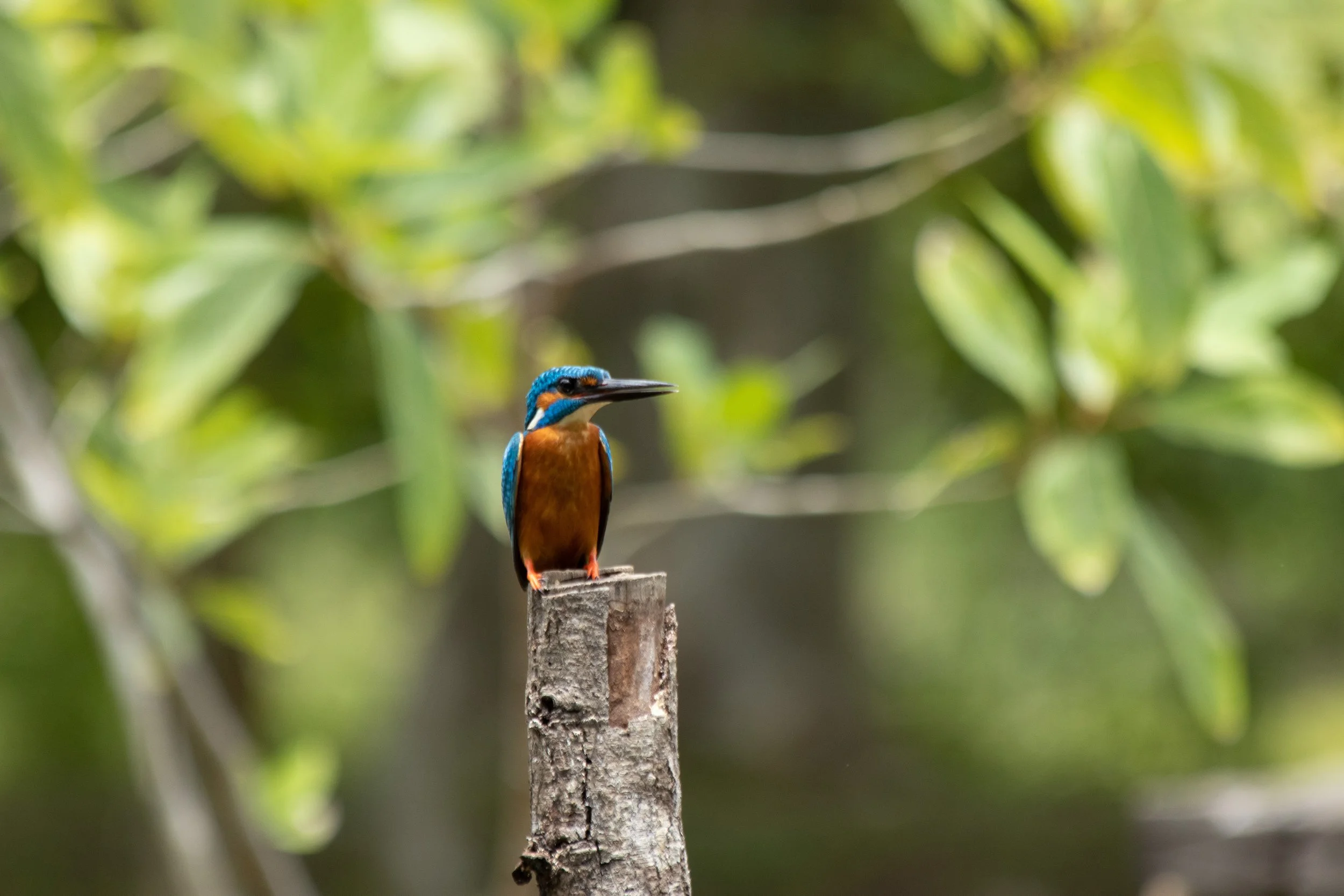
Common Kingfisher
Many people think they need expertise before they can begin noticing nature properly.
They assume that unless they can identify every bird call, name every tree, recognize every track, or explain every sound in the undergrowth, they are somehow not really seeing what is around them. So they wait for knowledge before allowing themselves attention.
But the truth is often the other way around. Most meaningful noticing begins long before naming.
It begins with something much simpler: pausing long enough to realize that the world around camp is not still, empty, or generic. It is active. Layered. Full of small signals.
A bird calling from one direction and then another. A sudden hush in the trees. A line of movement in dry leaves. A bent grass stem where nothing obvious stands.
A change in the rhythm of insects at dusk. A footprint pressed into soft ground after the night has passed.
This is where outdoor awareness begins. Not with mastery, performance or trying to become an expert overnight. But with the quiet decision to pay closer attention.
In Sri Lanka, that decision can be especially rewarding.
This island has a way of making life around you known quickly if you allow it. Even a calm campsite can hold layers of sound, movement, weather, texture, and presence. The outdoors here are rarely silent in the way many newcomers expect. Even when nothing dramatic is happening, there is almost always something to notice — a bird shifting branches, an insect chorus changing tone, a breeze lifting dry leaves, a sound in the distance that tells you the day is turning.
For beginners, this can be one of the most enjoyable discoveries of all.
You do not need to know everything to begin.
You only need to become available to what is already happening.
What this article will help you understand
If you only have a few minutes, here is the heart of it:
You do not need to be an expert naturalist to begin noticing the living world around camp. Good observation starts with attention, not identification. If you slow down, listen more carefully, and look for patterns instead of trying to “know everything,” nature becomes much easier to perceive.
Some of the best things to begin with are:
Birdsong
Movement
Tracks or footprints
Disturbed leaves or grass
Changes in sound at different times of day
The feeling of a place becoming quieter or more active
The goal is not to label every detail correctly. The goal is to stop moving through nature as though it were only a background.
Once you do that, even a simple campsite can become far richer than it first appeared.
Why people miss so much at first
Most people do not fail to notice nature because they are incapable. They miss it because they are moving too quickly, looking too broadly, or expecting the wrong kind of experience.
Many first-time campers arrive outdoors still carrying the habits of everyday life: scanning quickly, thinking ahead, looking for obvious highlights, waiting for something dramatic enough to count as “interesting.” This is understandable. Modern life teaches people to notice what is loud, immediate, and easily summarized.
Nature is often not like that.
Much of what makes the living world feel alive near camp is subtle. It shows up in repetition, small changes, patterns, and timing. A bird calling more urgently than before.
A brief silence where sound was steady a moment ago. A set of tracks that were not there yesterday. Leaves moving in a way the wind alone does not explain.
A branch where everyone keeps looking, even though you cannot yet see what they see.
If you expect nature to present itself like a headline, you will miss a great deal of it.
The living world often makes itself known gradually. That is why beginners sometimes feel that “nothing much is happening,” when in truth a great deal is happening — just below the threshold of how they are used to paying attention.
This is not a failure. It is simply the beginning of a new skill.
Observation begins before identification
One of the most freeing things a beginner can learn is that you do not need to know what something is in order to notice it properly.
In fact, the pressure to identify everything can make people see less, not more.
When the mind becomes overly concerned with getting the right answer, it often stops paying attention to the qualities of what is actually there.
Instead of observing the rhythm, shape, sound, movement, or context of something, it jumps straight into a kind of internal quiz: What bird is that? What animal made that? What tree is this?
Sometimes that knowledge matters, and it can certainly deepen the experience over time. But early on, it is often much more useful to ask simpler questions.
What changed?
Where is the sound coming from?
Did that happen once or several times?
Did the leaves move with the breeze, or against it?
Was that footprint fresh or softened by time?
Did the whole area become quieter, or just one part of it?
These questions build awareness without demanding expertise.
This matters because real field awareness is often rooted in noticing pattern before you know the name.
A person who can say, “Something changed in the soundscape just now,” may be observing more accurately than someone who knows many species names but is not actually paying attention in the moment.
In Sri Lanka too, there is a long, quiet tradition of reading signs before categorizing them too formally — noticing bird behavior, sensing rain in the air, reading the mood of wind, paying attention to the land as a living source of signals. Camping can return people to that older, more direct kind of noticing.
Birdsong is one of the easiest doorways in
If you are new to noticing the living world around camp, birdsong is one of the best places to begin.
Not because you need to identify every bird, but because birds are often among the clearest indicators that something in the environment is active, changing, or holding a certain rhythm.
Birds tell you many things at once.
They tell you that the day is starting.
They tell you where attention is gathering.
They sometimes tell you when something has shifted in the environment.
They reveal patterns of morning, evening, alarm, movement, and settling.
For beginners, the easiest step is simply to listen for differences.
Not every bird call needs to be “known.” But you can begin by noticing:
One repeating call versus many layered calls
A sudden burst of sound
A call that moves through space
A sharper or more urgent rhythm than the usual background sound
The time of day certain sounds become more common
At camp, especially in Sri Lanka, morning and evening can be full of this kind of information.
Even without naming a single bird, you can begin noticing that the soundscape is not random.
It has structure. It rises, shifts, quiets, and changes according to light, movement, and the life unfolding around you.
The moment a person realizes that birds are not “just making noise,” something important changes.
They stop hearing the outdoors as a general ambience and hear it as communication.
Tracks, footprints, and disturbed ground tell quiet stories
Some people listen first. Others look down.
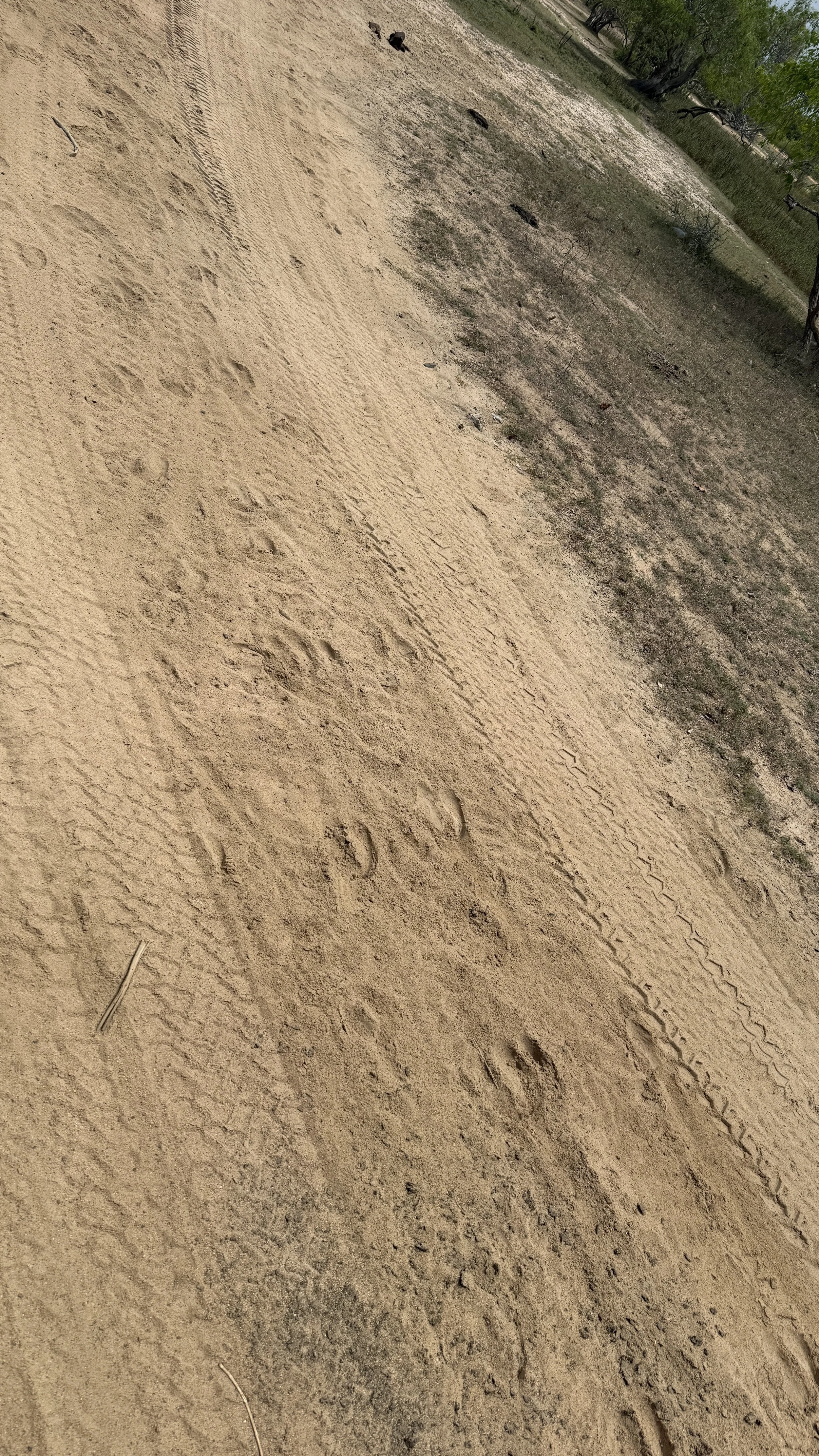
The ground around camp can be one of the most readable places for beginners, because it often holds visible signs of what has passed through, paused nearby, or moved during the night. Tracks, footprints, bent stems, disturbed dust, leaf scatter, and softened patches of soil can all offer clues.
Again, you do not need expert-level identification to begin.
The first useful question is not always whose track is this? It may simply be:
Was this here before?
Does it look fresh?
What direction is it going?
Is there more than one?
Does the ground look stepped on, dragged through, or only lightly marked?
These are the beginnings of real observation.
The same goes for disturbed leaves. A patch of leaf litter may look random until you notice that one area has been recently shifted, that a light trail of movement runs through it, or that a section of grass lies differently from the rest. The eye becomes sharper when it stops looking only for “big” things.
In Sri Lanka, where soil, dust, leaf litter, and soft ground can often hold the traces of movement well, these signs can become one of the most enjoyable ways to feel that the place around camp has a life of its own — even when that life is not currently standing in front of you.
A footprint, even when not fully understood, reminds you of something very important: you are not in an empty place.
Falling leaves, wind, and movement teach you what “normal” feels like
One of the less obvious but deeply useful parts of noticing nature is learning what belongs to the normal rhythm of a place. This may sound simple, but it is one of the most important forms of outdoor awareness.
If you begin to notice how wind usually moves through a particular campsite, how leaves normally fall, how branches sound when nothing unusual is happening, and how insects hold a steady tone during certain hours, then anything that changes that pattern becomes easier to notice too.
This is how many subtle observations work.
You do not spot the unusual first. You learn the ordinary well enough that the unusual stands out.
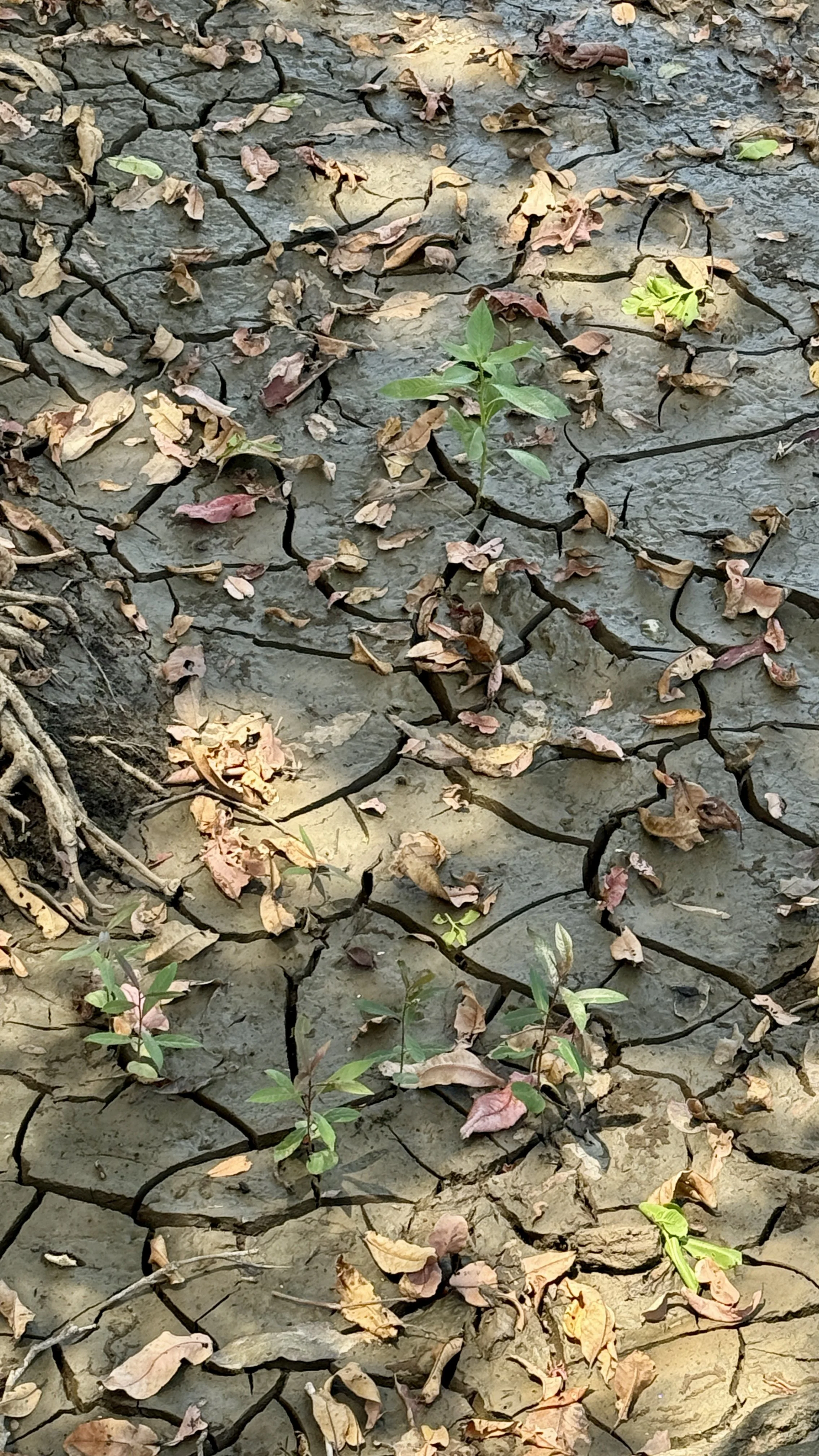
A single leaf falling is nothing extraordinary. But if a cluster of dry leaves moves low and sideways in a way that does not match the breeze, your attention may sharpen.
A branch shifting in the wind is ordinary. But repeated movement in the same patch with no wind at all may tell a different story. Insects holding a constant tone may become background. A sudden drop in that sound can be meaningful simply because it is a break in pattern.
For beginners, this can be an exciting realization.
The outdoors are not only a collection of isolated events. They are a living rhythm.
The more you get to know that rhythm, the easier it becomes to notice when something changes within it.
The best way to notice more is to slow down
People often ask how to become “better” at observing nature.
The answer is rarely more complicated than this:
Slow down enough to let the place become legible.
A rushed mind misses detail.
A busy body disturbs what it hopes to notice.
A person who is always looking for the next thing often overlooks what the current moment is already offering.
This is why so much noticing happens not while hurrying, but while waiting.
Sitting with tea.
Standing quietly.
Walking without needing to arrive somewhere immediately.
Pausing after hearing something once.
Letting your eyes adjust to shape, movement, and repetition.
In Sri Lanka, where even a small patch of outdoor space can hold birds, insects, changing air, and subtle shifts in activity, slowness is often richly rewarded.
A few minutes of stillness can reveal more than a restless half hour of scanning.
This is especially true around camp, where life often gathers at the edges. The edges of light and shadow. The edges of trees and clearing. The edges of sound, where something enters or leaves the atmosphere of the campsite. If you linger long enough in these moments, the place begins showing more of itself.
Children are often excellent at this naturally
One of the most wonderful things about camping with children is that many of them are naturally good at noticing.
Not because they know more, but because they are less embarrassed about paying attention to small things.
Adults often dismiss things that seem minor:
An ant trail,
A repeated bird call,
A shape in the dirt,
A rustle in leaves,
A feather on the ground.
Children, by contrast, can become completely absorbed in them.
This is not a childish distraction. It is often the pure beginning of good field awareness.
Children tend to:
Stay curious longer
Look closely without needing immediate answers
Care about texture, movement, and repetition
Revisit the same small thing until they understand it better
Adults can learn a great deal from this.
A child crouching beside a patch of ground, following a line of tiny movement with total seriousness, is often practicing the exact kind of attention many grown people are trying to relearn in nature.
This is one reason family camping can be so rich. It does not only bring children into the outdoors. It can also bring adults back into a more direct relationship with observation.
You do not need an expert’s eye — only a present one
There is something deeply reassuring about this.
Many people assume nature appreciation belongs mainly to experts — birders, trackers, researchers, people with field guides and years of accumulated knowledge. Those people do bring great depth, and their knowledge is valuable. But the first threshold of noticing is much more democratic than that.
You do not need specialist language to be moved by a dawn chorus.
You do not need technical skill to see that a fresh track matters.
You do not need years of field experience to feel that the environment has shifted in tone.
You only need to be present enough to register what is there.
That presence becomes the foundation for everything else.
Knowledge may follow. Names may come later. Skills may deepen. But the earliest and most important step is this simple one: allowing the world around camp to stop being a blur.
Once that happens, even an ordinary campsite becomes far more interesting than it looked before.
What people often get wrong
A few common assumptions make it harder for beginners to start noticing well:
1. Thinking you must know names before you can observe
Attention comes first. Names can come later.
2. Looking only for dramatic sights
Much of nature reveals itself through small patterns and changes.
3. Moving too quickly
A rushed body and mind miss a great deal of quiet information.
4. Trying to force meaning immediately
Not every sound or sign needs instant explanation. Sometimes noticing it clearly is enough.
5. Assuming “nothing is happening”
Very often, plenty is happening — just below the pace of ordinary attention.
First time trying to notice more? Start here
If you want to begin observing the living world around camp more deeply, keep it very simple:
Start with sound
Listen for repetition and change
Look at the ground more often
Notice what seems fresh, shifted, or out of pattern
Spend a few minutes being still
Stop trying to identify everything immediately
Let curiosity stay open a little longer
You are not trying to prove knowledge.
You are learning how to stay with a place long enough for it to reveal more of itself.
What noticing really gives you
The reward of paying attention outdoors is not only information.
It is a relationship.
A campsite stops feeling like a generic patch of nature and becomes a living place with its own rhythms, moods, and signs.
You begin recognizing that different hours sound different. That the ground remembers movement. That birds shift the shape of the morning.
That wind, leaves, insects, and silence all have their own patterns.
With that, something changes in you too.
You move less carelessly.
You listen more fully.
You start feeling less like someone passing through scenery and more like someone actually in conversation with the place.
That is one of the most beautiful things camp can offer.
Not only shelter.
Not only rest.
But the chance to become attentive again.
A gentle closing thought
The living world around camp rarely demands that you understand everything at once.
It asks for something simpler.
A little patience.
A little stillness.
A willingness to listen before naming.
A willingness to look closely before concluding.
Birdsong, footprints, falling leaves, a sudden hush, a patch of disturbed earth — these are small things, perhaps.
But they are often the first signs that a place has begun opening to you.
In Sri Lanka, where the land so often speaks in textures, sounds, movement, and soft shifts of atmosphere, learning to notice these small things can change the entire feeling of being outdoors.
Not because the world becomes louder. But because you have finally become quiet enough to hear it.