
Why Camping Feels Different When It’s Slow: The Case Against Rushing Through Nature
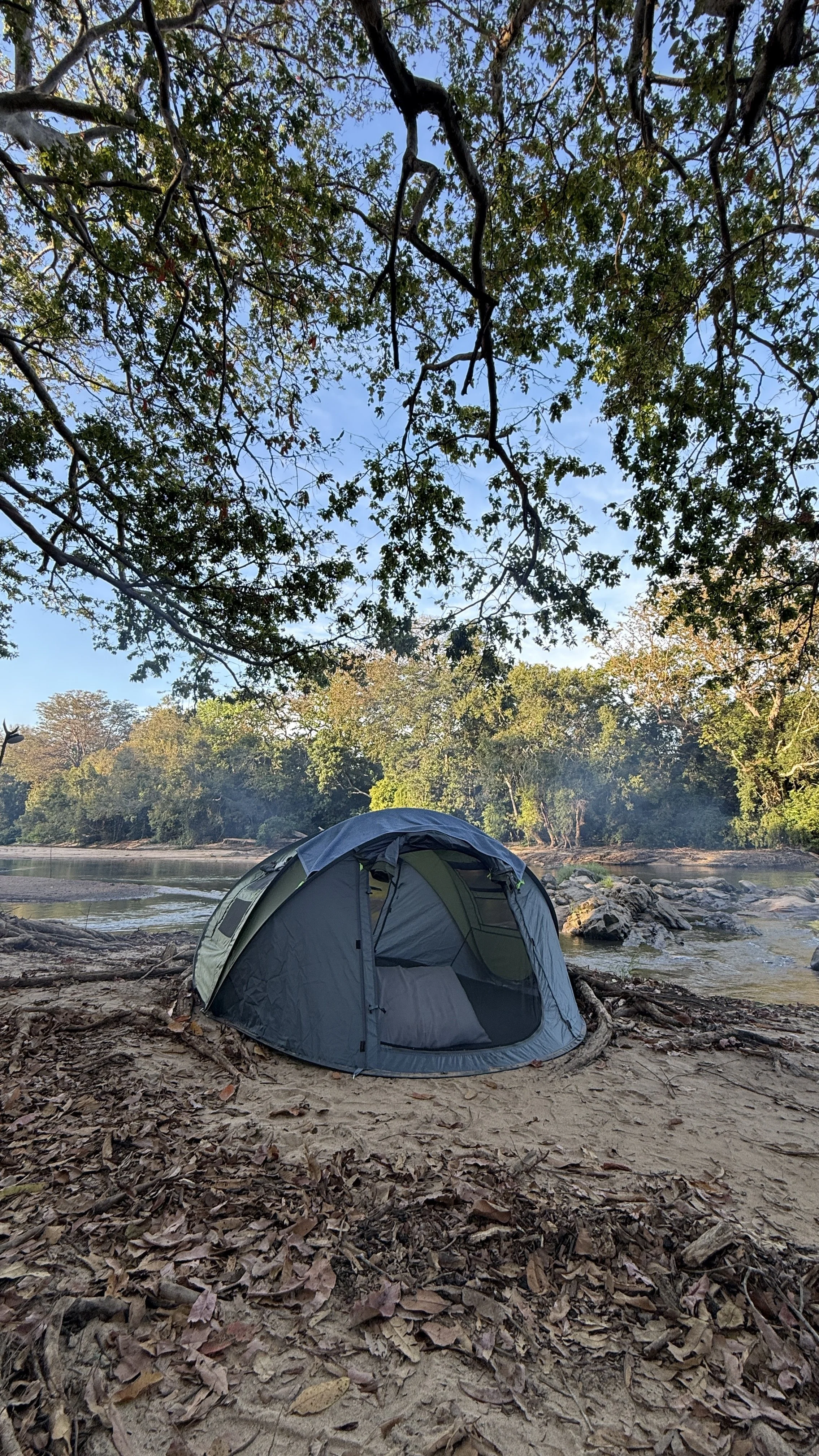
Some people go camping and never quite arrive.
They reach the campsite. They unpack. They take a few photographs. They ask what happens next. They look for the main event, the highlight, the thing that proves they were really “out there.” All the while, the most valuable part of the experience is quietly waiting just beyond the pace they have brought with them.
This is one of the strangest habits modern life trains into us.
We learn to move quickly even when there is nowhere urgent to be. Rush not only because there is too much to do, but because speed itself begins to feel normal. We carry that rhythm into weekends, holidays, conversations, meals, and even rest. Then, when we enter nature, we often do the same thing there too. We hurry to settle. Hurry to see. Hurry to reach the point of the outing. Hurry, without meaning to, past the very conditions that make being outdoors worthwhile.
Good camping asks for something different.
Not laziness. Not passivity. Not a vague idea of doing nothing. It asks for a slower kind of attention. The kind that notices before it names.
The kind that allows the body to match the place. The kind that stops treating every hour like a segment to be optimized.
In Sri Lanka, this matters deeply.
The island itself teaches rhythm if you let it. Heat changes the shape of the day. Light matters. Mornings and evenings carry different kinds of life. Afternoon stillness is not empty time but part of the natural pulse of the place. The land does not always reward speed. Often, it opens most fully to those who settle enough to receive it.
This is true of wildlife.
It is true of camp comfort.
It is true of conversation.
It is true of appetite, sleep, and the subtle mental exhale that brings people back to themselves outdoors.
The best camping is rarely the fastest, busiest, or most packed with “moments.”
Very often, it is the camping that leaves enough room for the place to work on you at its own pace.
What this article will help you understand
If you only have a few minutes, here is the heart of it:
Good camping feels better when it is approached slowly. Rushing through camp reduces attention, flattens the experience, and makes people miss much of what the outdoors quietly offer. Slower camping creates more ease, more noticing, better group rhythm, deeper rest, and often even better wildlife experiences.
This does not mean you need to force some idealized stillness.
It means:
Not treating the trip like a checklist
Not trying to extract maximum output from every hour
Letting the day breathe
Allowing camp routines to unfold without strain
Understanding that some of the best parts of being outdoors do not happen on command
The wild does not always reward urgency.
In fact, many of the things people say they want from camping — calm, connection, perspective, beauty, better conversation, more presence — arrive more easily when the pace softens enough for them to land.
A slower trip is not a lesser trip.
Very often, it is a deeper one.
The city teaches us to rush, even when we do not need to
Most people do not arrive at camp empty- They arrive carrying the pace of the lives they have been living.
Even after leaving the city, the city often remains inside the body for a while — in the way the mind reaches for the next thing, in the urge to keep moving, in the low-level discomfort with pauses, in the habit of measuring a day by how much was done rather than how well it was inhabited.
This is not a moral failing. It is simply conditioning.
Urban life trains us to:
Think ahead constantly
Fill gaps automatically
Treat stillness as unproductive
Mistake movement for progress
Consume moments quickly before moving on to the next one
When people bring this pace into nature, they often do not realize they are doing it. They may think they are relaxed because they are no longer at work, but their attention is still moving in the same fragmented way. They settle into camp physically, yet mentally remain in a mode of scanning, anticipating, and subtly pushing forward.
This creates a strange mismatch.
The body is in a slower environment. The mind is still sprinting.
Until those two come into better alignment, much of what camping offers remains just out of reach.
This is one reason the first several hours of a trip matter so much.
Good camping often begins not when you arrive at the site, but when you stop dragging the speed of elsewhere through it.
Rushing makes you miss what the outdoors are actually offering
One of the clearest costs of rushing is not that it makes camping less comfortable. It makes camping less visible.
When people move too quickly through nature, they tend to experience only the broad outlines of a place. They see the obvious things: trees, open ground, sky, perhaps an animal, or a nice view. But the finer layers — the mood of the wind, the changing quality of light, the bird calls that mark different hours, the subtle behaviors around camp, the deepening ease of the evening — often fail to register.
The outdoors are full of quiet information. But quiet information is almost always missed by a hurried mind.
This is especially true in Sri Lanka, where landscapes often reveal themselves through detail rather than spectacle. A dry patch of leaf litter, a shift in bird activity, the stillness before rain, the way dusk arrives under tree cover, the changing tone of the air after sunset — these are not the kinds of things you usually perceive if you are mentally hurrying toward the next event.
The same is true of camp life itself.
If you rush setup, you miss the pleasure of the place taking shape.
If you rush meals, you miss the atmosphere around them.
If you rush conversation, you keep it shallow.
If you rush the evening, you miss the exact moment the camp begins to feel like camp.
A hurried trip can still be enjoyable - But it is often much thinner than it could have been.
Slow camping is not doing less. It is perceiving more.
When people hear the phrase “slow camping,” they sometimes imagine inactivity.
They picture idleness, long pauses, or the vague idea of simply sitting around. But slowness in camp is not really about doing less for the sake of it.
It is about changing the quality of attention you bring to what you are already doing.
You may still set up camp.
Still cook. Still walk. Still talk. Still observe. Still explore.
But when the pace is right, these things stop feeling like boxes to tick and start feeling more fully inhabited.
That is the difference.
In fast mode, tasks are completed.
In slow mode, they are lived.
Making tea becomes part of evening, not just a drink.
Watching a bird becomes a moment of contact, not just a sighting.
Sitting quietly becomes not empty time, but the point at which your senses begin catching up.
This is why slower camping often feels richer even when, on paper, “less happened.”
What changed was not only the number of activities.
What changed was the depth of each one.
A slower pace creates room for noticing, and noticing is where much of the value of camping actually lives.
Sri Lanka’s natural rhythm rewards patience
Some places tolerate rushing more easily than others. Sri Lanka often does not.
This island has a way of teaching people to pay attention to timing, whether they intend to or not. The warmth of the day shifts how and when movement feels comfortable. Morning and evening often carry the richest sensory life. Midday may ask for softness rather than effort. Weather can alter the mood of a landscape quickly. Bird activity, light, breeze, and even appetite all change in ways that are easier to appreciate when you are not constantly pushing against them.
This is part of the intelligence of being outdoors here.
A good day in camp is often not built by filling every hour equally. It is built by understanding that different hours offer different things.
Early morning may offer clarity, cool air, birds, and sharpness of observation.
Late afternoon may offer energy returning after heat.
Evening may offer the best atmosphere for shared food, fire, and long conversation.
Night may ask for quieter attention.
Even midday, when it feels still, may have value precisely because it asks you to rest rather than force the day forward.
This is not only practical. It is philosophical too.
There is a long-standing wisdom in Sri Lankan life — especially outside urban centers — of not fighting the day when the day is clearly telling you its shape. Rain, heat, soil, season, light: these are not inconveniences to be overruled. They are conditions to be read.
Camping becomes far more satisfying when approached the same way.
Wildlife rarely rewards hurry
Many people go outdoors hoping, among other things, to feel close to the living world. But the living world is rarely interested in being chased.
This is one of the subtle ironies of nature-based travel: the more people hurry toward an encounter, the more likely they are to miss the broader conditions that make meaningful encounters possible. Wildlife, even when not directly seen, is often first understood through patience — through sound, stillness, timing, signs, and the willingness to let a place reveal itself.
This is especially true in Sri Lanka, where so much of the landscape feels alive not only through what appears dramatically, but through what can be sensed, heard, inferred, and quietly witnessed.
A rushed mindset tends to flatten all of this into one question:
Did we see something?
A slower mindset asks better questions:
What is this place telling us?
What is active right now?
What changed when the light changed?
What can we notice if we stop trying to force the moment?
This applies not only to obvious wildlife, but to birds, insects, tracks, sounds, movement in the leaves, and the ambient presence of life around camp.
Good field awareness is often built through waiting well.
Some of the most rewarding experiences outdoors happen not because you chased them, but because you became quiet enough not to interrupt them.
Slow pace makes camps feel more comfortable too
There is also a very practical side to this.
Camping becomes physically and emotionally easier when the pace is not rushed.
When people move too quickly through camp, small things start to feel unnecessarily stressful:
Setup becomes hurried
Items get misplaced
Tasks feel sharper than they need to
The group loses rhythm
The body stays activated longer than necessary
By contrast, a slower pace allows camp comfort to build naturally.
You arrive.
You settle.
You orient yourself.
You help with what needs doing.
You begin to understand the space.
You eat when the body is ready.
You talk when conversation comes.
You rest when the day lowers itself into evening.
This kind of pacing reduces friction.
It also makes simple comforts land more deeply. A cup of tea means more when you are not rushing to the next activity. A seat by the fire feels better when you are no longer mentally standing up. Even sleep often comes more gently when the day did not feel like a sequence of hurried transitions.
This is one reason slow camping can feel more restorative than a trip with “more going on.”
The nervous system has finally been given a pace it can work with.
Slowness changes the way people relate to each other
It is not only the environment that changes when the pace softens.
People change too.
When a group is rushed, conversation tends to stay practical. Energy stays outward-facing. People speak in coordination mode: what next, where is that, who has this, what time are we doing that. Even when the mood is pleasant, the deeper social ease of camp has less room to emerge.
But when the pace slows, something else becomes possible;
Silence stops feeling like a gap to fill.
Jokes land more easily.
Stories appear without forcing them.
Children begin absorbing themselves in ordinary things.
Adults stop trying to “manage the experience” quite so tightly.
The group starts functioning less like separate people completing tasks and more like a temporary little community living in the same rhythm.
This is one of the great hidden gifts of slower camping. It gives people time to arrive not only in the place, but in each other.
Often, that is when the most meaningful parts of a trip begin.
Not because something spectacular happened.
But because enough space appeared for everyone to become more fully present.
What people often get wrong
A few common assumptions make it harder for people to access the deeper value of camping:
1. Treating the trip like a checklist
The more you try to “fit everything in,” the more likely you are to miss the texture of where you already are.
2. Mistaking stillness for inactivity
Quiet, waiting, watching, and simply being present are not empty parts of the experience.
3. Thinking more activity means more value
A busier trip is not always a richer one.
4. Trying to force nature to perform
The outdoors often reward patience more than pursuit.
5. Rushing through the transitions
Arrival, setup, dusk, meals, and mornings are often where the deepest feeling of camp actually lives.
First time camping? Start here
If you are new to camping, one of the best things you can do is release the pressure to make every hour count in an obvious way.
Instead:
Let the day breathe
Arrive without needing immediate payoff
Allow setup to be part of the experience
Notice what happens when you stop pushing
Trust that not every valuable moment will announce itself loudly
Let the trip become deeper, not merely fuller
You do not need to squeeze the wild for meaning. Very often, it offers more when you stop gripping for it.
What a slower trip gives back
When camping slows down enough, certain things begin returning almost on their own.
You notice more.
You breathe differently.
Your body starts following the day instead of overriding it.
Food tastes better.
Conversations soften.
Children become more absorbed.
The night feels less like interruption and more like atmosphere.
Even the simplest routines begin feeling fuller.
This is not because a slow pace turns everything into something profound.
It is because it finally gives ordinary things the room to be felt properly.
Much of what people say they are seeking in nature — peace, clarity, perspective, closeness, rest — arrives not in the dramatic peaks of the trip, but in those ordinary things being fully received.
A gentle closing thought
Good camping does not always ask you to go farther. Often, it asks you to go slower.
To let the place come toward you a little.
To stop treating the day like something to conquer.
To allow comfort, conversation, weather, hunger, light, and silence to unfold at the pace they were meant to.
In Sri Lanka, where the land itself often teaches rhythm through heat, birds, dusk, rain, and the soft logic of the day, this can feel less like a new lesson and more like an old one being remembered.
That may be why slow camping feels so good when it is done well.
Not because nothing is happening.
But because, at last, you are moving slowly enough to be inside what is happening.