
Food Tastes Better Outside: Camp Cooking, Appetite, and the Joy of Eating in the Wild
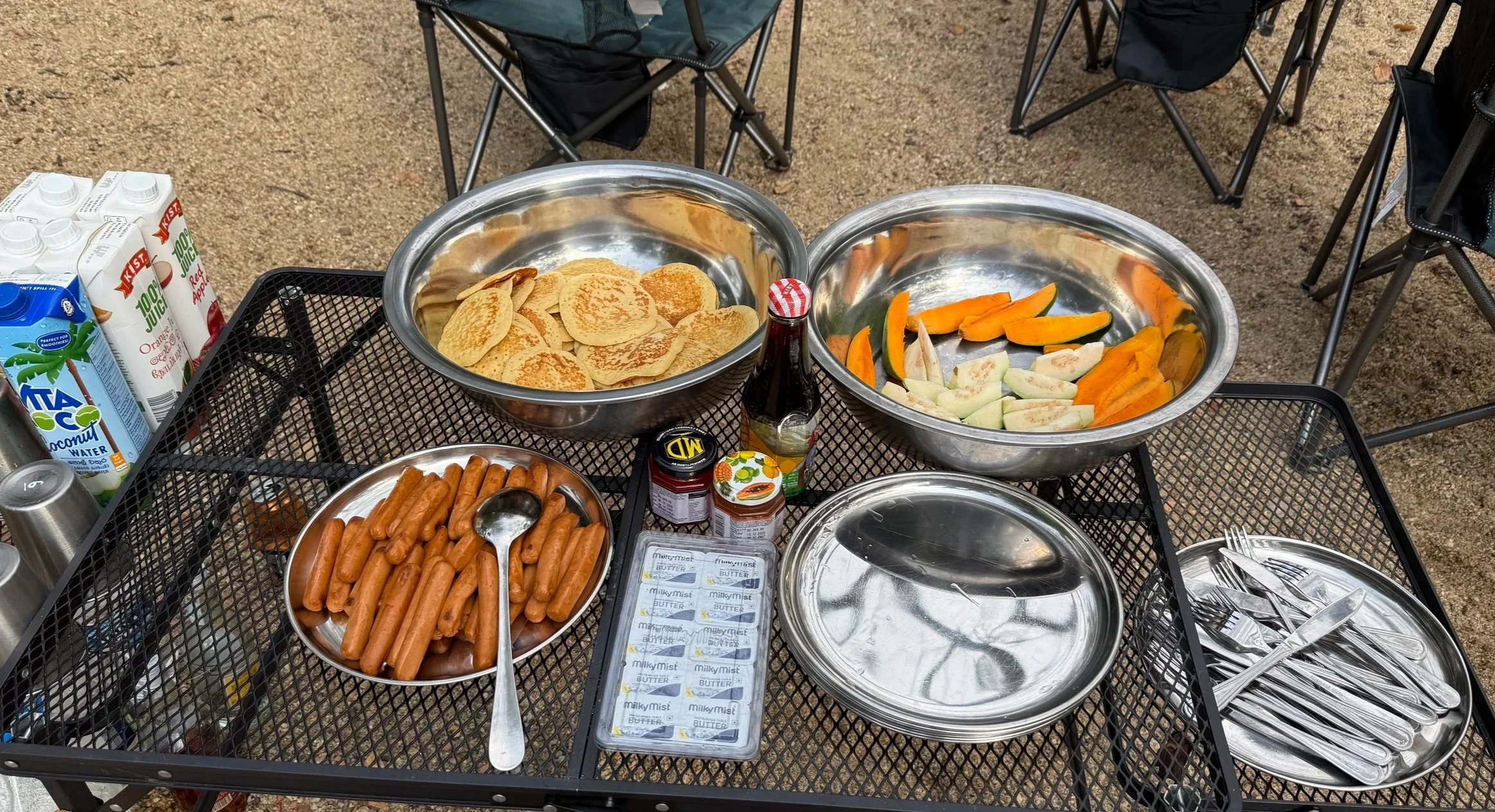
There are meals you forget almost as soon as they are finished.
And then there are camp meals.
Not always because they are elaborate. Not because they are plated beautifully, or cooked with great ceremony, or made from rare ingredients.
In fact, some of the most memorable food eaten outdoors is remarkably simple — tea poured while the light changes, something warm passed around once camp is set,
a shared plate that somehow tastes better than it would anywhere else.
This is one of the quiet wonders of camping.
Food outdoors often feels fuller. More satisfying. More alive. A meal that would seem ordinary at home can become deeply comforting at camp.
Appetite changes. Attention changes. The body receives food differently when the day has been shaped by fresh air, movement, setup, shared work, cooling evening air, and the slow settling of the outdoors around you.
And in Sri Lanka, this feeling can be especially rich.
A warm drink as the dusk softens. Smoke in the air. The scent of spice or something grilling. The slight hunger that comes after time outside.
The way conversation around food becomes easier when everyone has already been part of the same rhythm. Even a very simple meal can feel rooted, generous, and memorable in a way that has little to do with luxury and everything to do with context.
For many first-time campers, this comes as a surprise.
They may worry about what food will be like in camp, assuming it will be more basic, less comfortable, or more effort than it is worth. But often, the opposite happens.
They discover that food becomes one of the most grounding and enjoyable parts of the entire experience.
Not only because eating outdoors tastes good.
But because camp cooking and camp meals do something deeper:
they turn a group of people in one place into a shared living rhythm.
What this article will help you understand
If you only have a few minutes, here is the heart of it:
Food often tastes better while camping because the environment changes the way we experience hunger, comfort, attention, and shared time.
Fresh air, physical movement, outdoor atmosphere, and the slower rhythm of camp all make meals feel more satisfying and memorable.
When the food is prepared or shared in a communal, thoughtful way, the meal becomes more than nourishment — it becomes part of the emotional center of the trip.
Camping food does not need to be complicated to feel special.
In fact, the best outdoor meals are often:
Simple
Warm
Well-timed
Easy to share
Connected to the rhythm of the day
The joy comes not only from the food itself, but from everything around it:
The setting, The appetite, The fire, The conversation, The coolness of evening after heat, The feeling that everyone has arrived properly by the time the meal begins.
A good camp meal feeds more than hunger.
It settles people. It gathers people. It helps the place start to feel like camp.
Why appetite changes outdoors
One of the first things many people notice while camping is that they feel hungry in a cleaner, simpler way.
Indoors, hunger is often muddled. People eat by schedule, by habit, by convenience, by boredom, by stress, or while distracted.
Meals can happen between tasks or in front of screens. Appetite gets layered with interruption.
Outdoors, especially in a well-paced camp environment, hunger often becomes easier to understand.
The body has usually been moving more. You have walked, lifted, bent, carried, helped set up, spent time in fresh air, adjusted to changing temperature, and been more physically present in your surroundings. Even when the movement is not intense, it is often more natural and continuous than the stop-start pattern of everyday indoor life.
This has a quiet effect.
Food begins to feel less like something you fit into the day and more like something the body is truly ready for.
There is also a sensory clarity that comes with outdoor life. Heat, breeze, dusk, smoke, the scent of food cooking, the feeling of settling after activity — all of these sharpen appetite. They help the body register both effort and reward more directly.
In Sri Lanka, where the transition from warm daylight into a softer evening can make the first proper meal outdoors feel especially welcome, this effect can be strong.
After time in the open air, a simple warm meal can feel surprisingly satisfying, not because it is rich or excessive, but because the body receives it without all the usual noise.
This is one reason camp food often feels so good.
It meets a truer appetite.
Food becomes part of the rhythm of camp
At home, meals are often squeezed into life.
In camp, meals often help shape life.
This is one of the subtle differences that makes food outdoors feel more meaningful.
A meal at camp is not always an interruption between other priorities. It is often one of the central points around which the day organizes itself.
Arrival leads to setup. Setup leads to settling.
Settling leads to tea, a snack, or the beginning of cooking.
Evening gathers. The light changes. The air cools.
And then food becomes the moment where the practical day begins to turn into shared rest.
That sequence matters.
The meal does not exist in isolation. It arrives after effort. After movement. After adjustment. After the group has started becoming a group.
This gives it more emotional weight than a meal eaten casually between distractions.
Even breakfast in camp tends to carry a different quality.
Morning light, birds, cool air, and the simple act of warming up to the day all make food feel more connected to time and place.
In this sense, camp meals are not only about eating. They are markers.
They tell the body and the group where they are in the life of the camp.
Because of that, they often feel more memorable than meals that are technically more impressive but less rooted in anything around them.
Camp cooking is less about complexity and more about atmosphere
One of the most common misunderstandings about outdoor food is the idea that it must be either highly elaborate to feel special, or so basic that it becomes something you simply tolerate.
In reality, camp cooking works best in a much more balanced space.
The most satisfying camp meals are usually not the most complex ones. They are the ones that suit the environment well.
They are warm when warmth is welcome, simple enough to be practical, and flavorful enough to feel generous without turning the preparation into a source of stress.
This matters because the pleasure of camp cooking comes from more than the recipe.
It comes from:
Timing
Smell
Shared anticipation
The mood of the evening
The sight of steam in cooler air
The comfort of something warming after a day outdoors
The feeling that food is part of settling in, not just being consumed
A meal in camp can be humble and still feel abundant.
That is one of the quiet lessons camping teaches. When the atmosphere is right, food does not need to be extravagant to feel deeply satisfying.
A simple dish, prepared with care and served at the right moment, can carry much more pleasure than something far more elaborate eaten in a rushed or disconnected setting.
There is something gently old-fashioned in this too. In many Sri Lankan homes and communities, good food has never been only about display.
It has long been about timing, warmth, hospitality, shared presence, and the feeling of being properly looked after. Camp food, at its best, carries some of that same spirit.
Why shared cooking changes the feeling of a trip
Cooking together in camp does something that many indoor meals no longer do.
It creates participation before it creates consumption. This is a meaningful difference.
When people help in even small ways — preparing something simple, passing items, tending to a task, arranging a shared area, pouring drinks, assisting with setup around the meal — food becomes something the group has arrived at together. The meal feels more connected to the life of the camp because the camp has shaped its making.
This changes the mood.
People are less likely to experience the meal as a service being delivered to them and more likely to experience it as a shared moment the group has helped make possible. That creates belonging. It also makes the meal feel less transactional and more human.
This is part of why food often plays such an important role in participatory camping. It is not just fuel. It is one of the clearest expressions of the rhythm itself:
We arrive, make camp, share the work, share the space, and we share the meal.
For children, this can be especially meaningful. A child who helps with one small part of the meal often remembers the food more deeply because it became part of their experience, not just something placed in front of them.
For adults too, the simple act of doing a little can transform how restorative the meal feels. It is not draining effort. It is meaningful contribution.
After contribution, comfort tends to land more deeply.
In Sri Lanka, outdoor meals carry their own kind of richness
Not all camp food feels the same everywhere.
Sri Lanka brings its own texture to outdoor eating, and part of what makes camp meals here feel special is the way local conditions support the experience.
The flavors, the climate, the timing of the day, and the sensory life of the island all shape how food is received outdoors.
A warm drink in cooling air feels different here after a hot day. Something gently spiced or smoky can feel especially satisfying once the evening begins to soften.
The scent of food carries differently through open air, leaves, and woodsmoke than it does indoors.
Even the appetite itself often feels sharper after time in tropical conditions, where the body has spent the day adjusting to heat, light, and movement.
There is also something distinctly Sri Lankan in the feeling of shared food outdoors.
A meal can be simple and still feel generous.
A cup of tea can feel like a proper act of welcome.
Something warm passed around at the right time can change the entire mood of a group.
These are not grand luxuries. They are forms of care.
In camp, care is often felt most clearly through food.
Even when the menu is not elaborate, what matters is that it suits the moment.
Outdoors teaches people quickly that the right meal in the right atmosphere can feel far more satisfying than a more impressive meal in the wrong one.
That is part of the richness of camp cooking here:
it often feels rooted in both place and timing.
Food helps people settle into each other
One of the most beautiful things about a shared camp meal is how quickly it softens the distance between people.
Even before anyone says very much, food begins creating a kind of ease.
Someone passes a plate.
Someone asks if the tea is hot enough.
Someone laughs about the day’s small mishaps.
Someone who was quiet at arrival begins speaking more naturally.
Children become absorbed in the simple seriousness of eating outdoors.
The group starts feeling less like separate individuals occupying the same space, and more like a temporary little community.
This is not accidental.
Meals create pause.
They create a center.
They create a moment when everyone is facing the same thing at the same time.
In camp, where the day has already involved shared setup, movement, and adjusting to the environment, the meal often becomes the first true moment of collective ease.
It says, in a very practical way: we have arrived, the space is working, the hard part is done, now we can gather.
That can be deeply restorative.
Not because conversation must become profound, but because people often feel more at ease speaking once the body is warm, fed, and no longer in transition.
Even when the talk stays simple, the emotional effect can be stronger than expected.
A good meal does not only fill the stomach.
It lowers the shoulders.
Why children often remember camp food so vividly
Children have a remarkable ability to attach memory to context.
This is why food outdoors can stay with them so strongly. A simple drink, a familiar snack, or a basic meal can become unforgettable when it is tied to a tent, a fire, a torch after dark, the excitement of being outside, or the novelty of helping in small ways.
Adults often underestimate this.
They assume children need elaborate “special” food experiences to remember a trip. But very often, what children remember is not the most impressive part of the menu.
It is the fact that the meal happened in a place that felt alive.
They remember:
The cup they held while sitting outside
The smell of dinner while the sky darkened
The warmth of something after the evening cooled
Helping carry or arrange something small
Being allowed to stay up just long enough for the meal to feel like part of the adventure
This is one more reason camp food matters. It becomes part of the emotional architecture of memory.
And because children often live so directly through sensory experience, food in camp can become one of the strongest ways they remember not just what they ate, but what it felt like to be there.
What people often get wrong
A few misconceptions make camp food seem less important or more complicated than it really is:
1. Thinking camp food must be elaborate to feel special
In reality, simple food served at the right moment in the right atmosphere is often the most satisfying.
2. Treating meals as only functional
Food is not just fuel in camp. It is part of the rhythm, mood, and shared emotional life of the experience.
3. Underestimating appetite outdoors
Fresh air, movement, and a slower rhythm often make meals feel much more welcome than expected.
4. Forgetting that timing matters
A well-timed meal or drink can change the whole feel of the evening.
5. Seeing shared cooking only as extra effort
When done simply and well, shared participation often deepens the experience rather than making it feel burdensome.
First time camping? Start here
If this is your first camp, keep your expectations around food simple and grounded:
Do not expect complexity
Do expect appetite to feel different
Value warmth, timing, and ease
Let the outdoor setting do some of the work
Enjoy simple things properly
Allow meals to be part of the experience, not just a break in it
You do not need a gourmet production for food to feel memorable outdoors.
What you often need is much simpler than that:
The right moment, The right atmosphere, and something warming, satisfying, and shared.
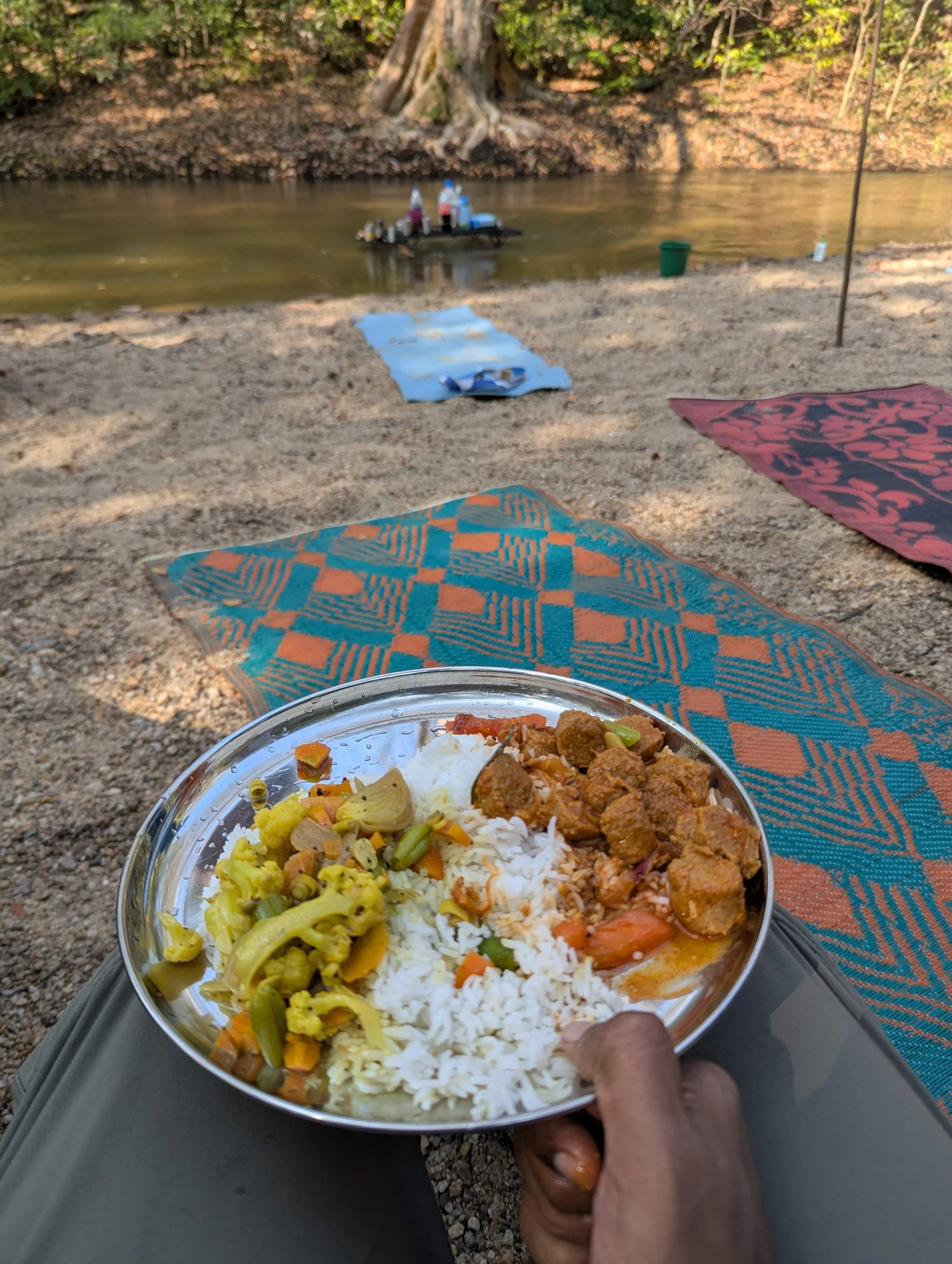
What a good camp meal really gives you
A good meal in camp does more than answer hunger.
It tells the body it can soften.
It tells the group that the day has become livable.
It marks the shift from arrival to belonging.
It turns effort into comfort.
It turns space into atmosphere.
And because of that, food in the wild often becomes one of the strongest anchors of memory.
Not only because of taste.
But because it is tied to everything around it:
Light changing,
Air cooling,
The smell of smoke,
The rhythm of conversation,
The ordinary miracle of being fed well in a simple place.
That is why camp meals linger.
They are not only eaten.
They are felt.
A gentle closing thought
Perhaps that is why food tastes better outside.
Not because the ingredients become different. But because we do.
We arrive hungrier in honest ways.
We sit down with fewer distractions.
We feel the warmth more clearly.
We notice the company more fully.
We receive simple things with more gratitude than usual.
In Sri Lanka, where evening, scent, spice, smoke, and open air can make even a humble meal feel deeply rooted in place, that feeling can be especially strong.
A good camp meal reminds us of something easy to forget in daily life:
That nourishment is not only what is on the plate —but the way a place, a moment, and a group of people come together around it.