
Is Camping in Sri Lanka Safe? A Calm, Honest Guide for Beginners
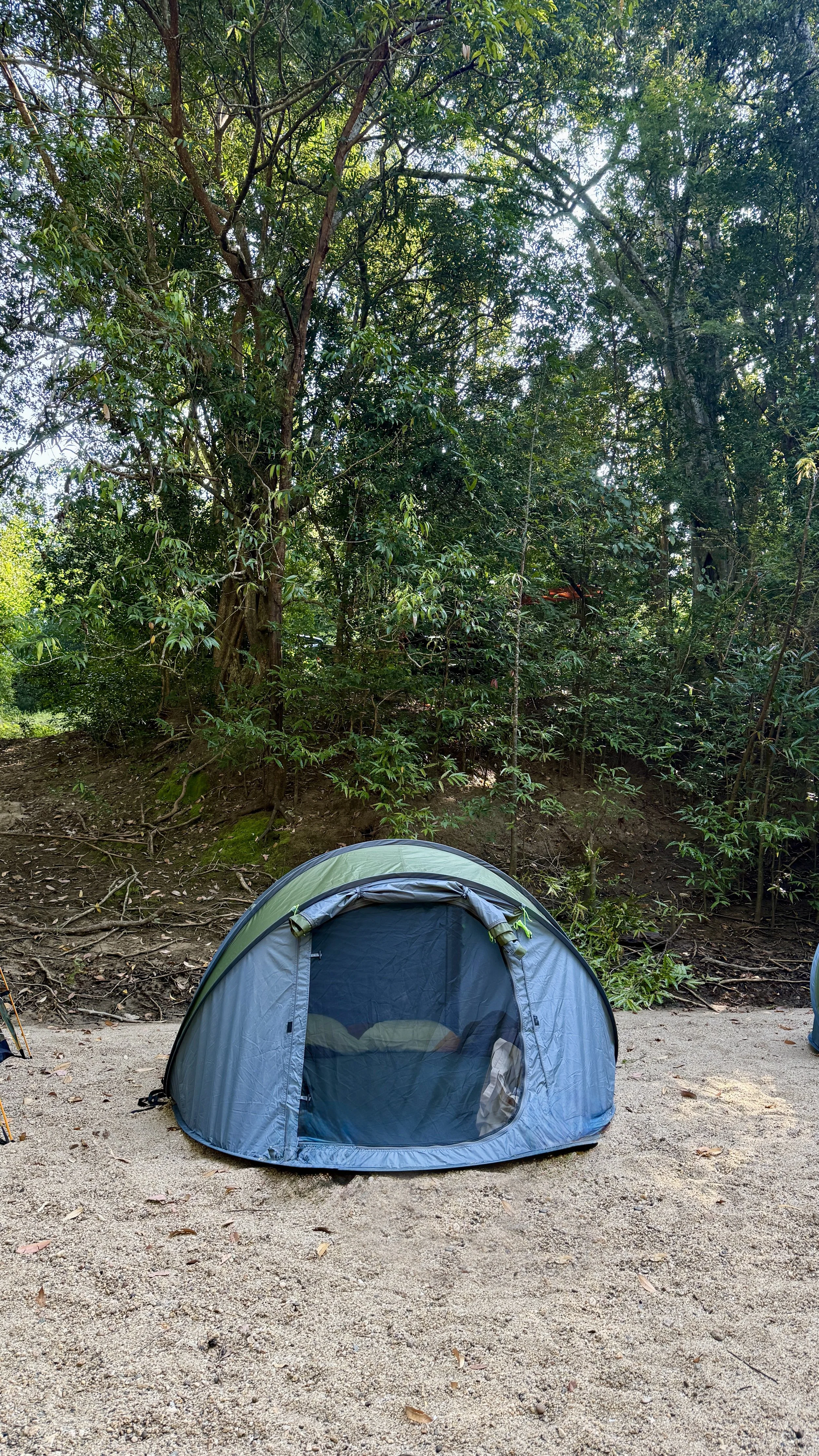
For many first-time campers, this is the question sitting quietly underneath all the others.
Before the packing list. Before the excitement. Before the curiosity about stars, campfires, birdsong, or waking up outdoors. Is it safe?
It is a fair question. In many ways, it is the right first question.
Camping, especially for those who are new to it, asks you to step outside the familiar comforts of indoor life. There are no walls in the usual sense. The sounds are different. The light changes differently. The ground, the weather, the distance between you and the living world — all of it feels more immediate. For beginners, that can make the outdoors seem more uncertain than it really is.
In Sri Lanka, where nature can feel especially alive, that question can feel even more pressing.
There are trees that speak in wind, insects that fill the evening with sound, uneven ground, changing weather, the possibility of wildlife nearby, and the simple fact that the outdoors are not arranged around human convenience. For someone unused to this, the imagination can quickly become louder than the reality.
The good news is that camping in Sri Lanka can absolutely be safe — when it is approached with the right mindset, the right structure, and the right respect for place. That last part matters.
Safety outdoors does not come from pretending the wild is harmless, and it does not come from fearfully treating every rustle like a threat. It comes from something much quieter than either of those extremes. It comes from preparation. It comes from discipline. It comes from good habits, clear boundaries, proper camp setup, and knowing that a well-run outdoor experience is built on awareness, not bravado.
For beginners, that can be deeply reassuring.
Because it means safety is not a mystery. It is not something magical or inaccessible. It is something that is created, maintained, and shared through small, sensible actions.
And once you understand that, the outdoors often begins to feel less intimidating — not because it has become less real, but because it has become more understandable.
What this article will help you understand
If you only have a few minutes, here is the heart of it:
Yes, camping in Sri Lanka can be safe for beginners. But like any meaningful outdoor experience, that safety depends on how the camp is approached. Good camping safety is built through proper setup, calm routines, respect for wildlife, attention to surroundings, and not treating the outdoors casually or dramatically.
Most first-time fears come from unfamiliarity, not from actual danger.
The outdoors feel different because they are different. That does not automatically make them unsafe. It means they need to be met properly.
A well-structured camp should feel calm, not chaotic. Thoughtful, not careless. Simple, not tense. When safety is handled well, it becomes part of the background of the experience — not something that dominates every moment, but something quietly woven through it.
The goal is not to make camping feel like a risk-free fantasy.
The goal is to understand the real outdoors clearly enough that you can meet it with confidence instead of fear.
Why this question matters so much to beginners
When people ask whether camping is safe, they are often asking more than one question at once.
They may be asking:
Will I know what to do?
Will I be protected from what I don’t understand?
Will I be able to relax?
What if something unexpected happens?
How close am I, really, to the wild?
These are not irrational questions. They are the mind’s way of trying to understand an unfamiliar environment before the body has had a chance to experience it.
Most indoor life trains us to take safety for granted. We rely on walls, locks, switches, roads, routines, and controlled environments. Outdoors, those obvious markers of security are replaced by something less visible and more human: awareness, good judgment, and shared responsibility.
That shift can feel unsettling at first.
The truth is, beginners often imagine camping in extremes. They picture either a perfectly serene nature retreat where nothing ever goes wrong, or a tense survival scenario where every sound could signal a problem. In reality, good camping usually sits far from both of those ideas. Most of it is remarkably ordinary.
You set up well. You keep your camp organized. You follow sensible habits. You move with awareness. You respect the environment.
You let the place be itself, while making sure you are behaving appropriately within it.
What feels unusual to beginners is not that camping is inherently dangerous. It is that safety outdoors is more visible in its process. You notice it more because you are part of it. Once that becomes familiar, it usually stops feeling frightening and starts feeling sensible.
What safety in camp really looks like
One of the most helpful things beginners can understand is that outdoor safety is usually not dramatic.
It does not look like constant alarm. It does not feel like fear. It does not depend on acting tough.
Real camp safety usually looks like:
Arriving with enough daylight to set up properly
Choosing a suitable campsite
Keeping shared areas orderly
Storing food responsibly
Knowing where things are
Moving carefully after dark
Understanding basic camp boundaries
Listening to guidance
Staying aware without becoming tense
In other words, safety is not one big action. It is a pattern. When that pattern is in place, the camp tends to feel calm.
This is important, because beginners sometimes expect safety to feel intense — as if being safe means constantly scanning for danger. But good outdoor safety is often the opposite. It reduces unnecessary drama. It gives everyone a stable rhythm to follow. It allows the mind to relax because the right things are already being done.
In Sri Lanka, this can be especially meaningful. The outdoors here are richly alive, but that aliveness does not need to be interpreted as threat. It simply means your environment deserves attention.
There is an older instinct in many parts of Sri Lankan life: to read a place before behaving casually within it. To notice weather, ground, wind, water, and sound. To understand that nature is not a backdrop, but a living context. Camping works best when that instinct is honored.
A well-set camp is one of the biggest parts of safety
Much of camping safety begins before the evening even starts.
A poorly chosen or poorly organized campsite can create avoidable discomfort and avoidable risk. A well-set camp, by contrast, makes the whole experience feel steadier, clearer, and easier to manage.
A good campsite considers:
Suitable ground
Weather and drainage
Practical space for movement
Safe, understood placement of equipment
Sensible shared areas
A layout that reduces confusion after dark
This does not need to be overcomplicated. In fact, the best setup often feels simple. But that simplicity is usually the result of thoughtfulness.
When a camp is arranged properly, people know where to walk. They know where things are. They are less likely to trip over gear, misplace essentials, or create clutter that becomes stressful later. Shared spaces feel livable. The camp begins to work with you instead of against you.
That alone removes a surprising amount of anxiety.
For beginners, a good setup is one of the fastest ways to feel reassured, because it turns the campsite from “a place in the wild” into “a place with structure.” You may still be outdoors, but you are no longer undefined within it. This is one reason participatory camp setup can actually help people feel safer. The more you understand the shape of the camp, the more the place makes sense to you.
Wildlife requires respect, not panic
For many people, the word “wildlife” is where their concern sharpens.
This is understandable. Sri Lanka is home to extraordinary biodiversity, and the possibility of being in landscapes where animals live can make camping feel very real, very quickly.
But one of the most important things to understand is this: Wildlife safety is not based on panic. It is based on respect.
That means:
Not treating animals as part of your entertainment
Not trying to get closer than you should
Not behaving carelessly with food or movement
Not wandering thoughtlessly
Understanding that the outdoors are shared space, not human-only space
Most wildlife-related safety is about not creating unnecessary situations in the first place.
This is where camp discipline matters. Food should be handled properly. Instructions should be followed. Movement, especially after dark, should be thoughtful. Noise and behavior should be appropriate to the environment. The aim is not to live in fear of wildlife, but to avoid behaving in ways that disrupt the natural balance of the place.
There is a big difference between being close to nature and being careless around it. In fact, one of the most remarkable parts of camping in Sri Lanka is that you can feel the presence of the living world deeply without interfering with it. Sometimes the most meaningful outdoor experiences come from exactly that — sensing life around you, respecting distance, and allowing the place to remain itself.
That is not less exciting. It is more mature.
The night feels more unfamiliar than it is dangerous
If there is one part of camping that makes beginners most alert, it is usually the night. This makes sense. Indoors, we are used to shutting out the world when darkness comes. Outdoors, especially in a campsite, the night remains present. You hear more. You sense more. The darkness feels more complete. Things that would be unnoticed in the city suddenly stand out.
But unfamiliar is not the same as unsafe. Night in camp often feels intense simply because it is active. Insects continue their chorus. Leaves move. Fabric shifts. A breeze can sound louder than expected. The natural world does not become silent just because humans want to sleep.
For first-time campers, this can make the imagination work harder than usual.
The key is understanding that most of what you hear and notice at night is simply the environment being alive. It does not all require interpretation as a problem. Good camp safety at night usually comes down to very practical things:
Using light properly
Knowing where you are stepping
Not moving around carelessly
Understanding camp boundaries
Telling someone if you need to move away from the immediate area
Respecting the night rhythm of the camp
Once these habits are in place, the night often becomes far less intimidating. For many people, the first night is not when they discover danger. It is when they begin learning that the outdoors sound different, but not necessarily worse.
Calm routine is one of the strongest forms of safety
Beginners often imagine safety as something extraordinary — a special skill, a protective layer, or some hidden expertise. In reality, one of the strongest forms of outdoor safety is simply routine. Routine brings predictability.
When a camp has a rhythm, people know what to expect. They know how the evening moves. They know when food is handled, when shared areas are settled, how movement happens after dark, where essential items are, and what the boundaries are. This reduces confusion, and confusion is often the root of avoidable mistakes.
Children benefit from this especially, but adults do too. A camp with calm routines feels less exposed because everyone is not improvising every decision from scratch. Instead, the group moves within an understood pattern. This creates emotional reassurance as well as practical safety.
That is why the safest camps often feel the least dramatic. They are not full of tense reminders and nervous energy. They simply function well. The right things are done in the right order, with the right amount of care. Because of that, people are freer to enjoy the actual experience.
What makes a beginner feel safe emotionally
Practical safety is essential. But for first-time campers, emotional safety matters too. A person can be in a technically safe environment and still feel uneasy if they do not understand what is happening around them. This is why clear explanation matters.
Beginners feel safer when:
They know what to expect
They understand the basic structure of camp
They know the boundaries
They are told what matters and why
They feel comfortable asking questions
They are not made to feel foolish for being new
A calm, well-guided outdoor experience reduces fear not by dismissing it, but by replacing uncertainty with understanding.
This is one of the reasons beginner-friendly camping should never be built around bravado. Making people feel small for being cautious does not make them safer. It only makes them quieter about what they do not understand.
Good camp culture does the opposite.
It makes room for questions. It explains things clearly. It turns the unfamiliar into the understandable. When that happens, people settle much more quickly.
What people often get wrong
A few misconceptions shape the way beginners think about camping safety:
1. Thinking fear is the same as caution
Fear can make people tense and reactive. Calm awareness is usually much more useful.
2. Assuming the outdoors are unsafe unless they feel like indoors
Camping is not meant to mimic indoor life. Its safety comes from different systems.
3. Treating wildlife as either harmless or terrifying
Both extremes are unhelpful. Wildlife should be respected, not dramatized.
4. Believing safety means no discomfort
A slightly unusual night, a new sound, or the need to pay more attention does not mean something is wrong.
5. Underestimating small habits
Many of the biggest safety advantages come from very ordinary routines: proper setup, lighting, organization, food handling, and listening to guidance.
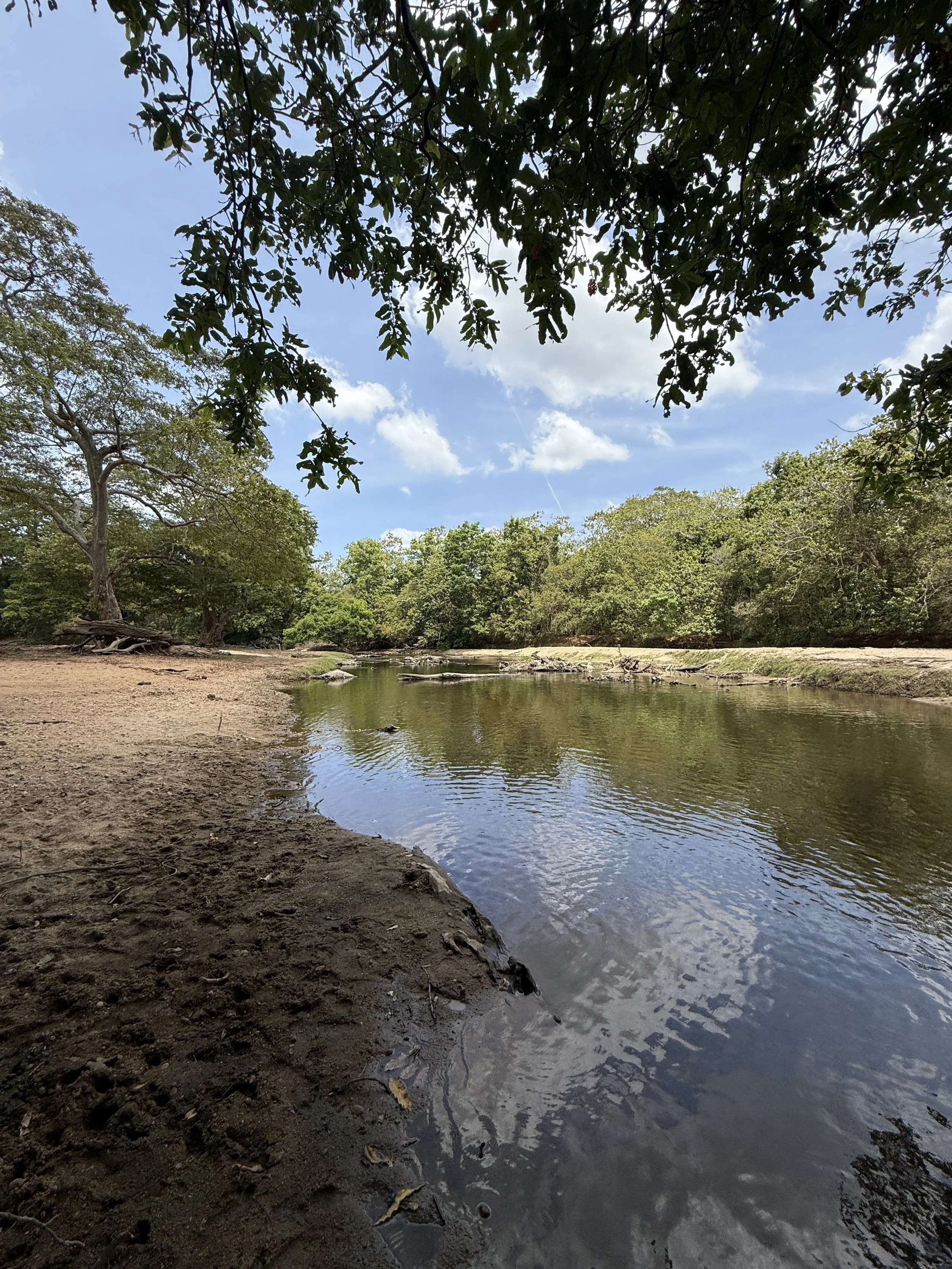
First time camping? Start here
If you are new to camping in Sri Lanka, this is the simplest mindset to bring:
Respect the outdoors without fearing them
Choose structure over improvisation
Listen carefully
Ask questions early
Move calmly, especially after dark
Treat camp routines seriously
Do not chase closeness with wildlife
Let unfamiliarity become familiar before judging it
You do not need to prove anything outdoors. You do not need to act tougher than you feel. You only need to meet the place with enough awareness and humility for it to begin making sense.
What safety feels like once you settle in
A safe camp does not usually feel tense. It feels settled.
It feels like knowing where things are. It feels like moving more confidently after the first hour. It feels like understanding which sounds are ordinary. It feels like trusting the rhythm of the place. It feels like the difference between arriving alert and waking the next morning more at ease.
For many first-time campers, this is one of the most surprising parts of the whole experience. They expected the outdoors to feel unpredictable in a frightening way. Instead, they discover that when things are done properly, camp often feels clear, calm, and deeply sensible.
Not because the wild has become less real. But because they have begun to understand how to be in it.
A gentle closing thought
Camping in Sri Lanka is not safe because nature has become tame.
It is safe when approached well because people choose to behave with care inside a living environment.
That care can look very simple:
Arriving in time,
Setting up properly,
Storing things well,
Moving with awareness,
Respecting distance,
Listening,
Letting the outdoors be themselves.
For beginners, that should be reassuring. Because it means the question is not really whether the outdoors can ever be completely controlled.
It is whether they can be met with enough understanding to become less intimidating and more deeply knowable.
Sometimes the first real feeling of safety in camp does not come when you first arrive.
It comes later — when the place that felt unknown begins, quietly, to make sense.