
What to Pack for Camping in Sri Lanka Without Overpacking
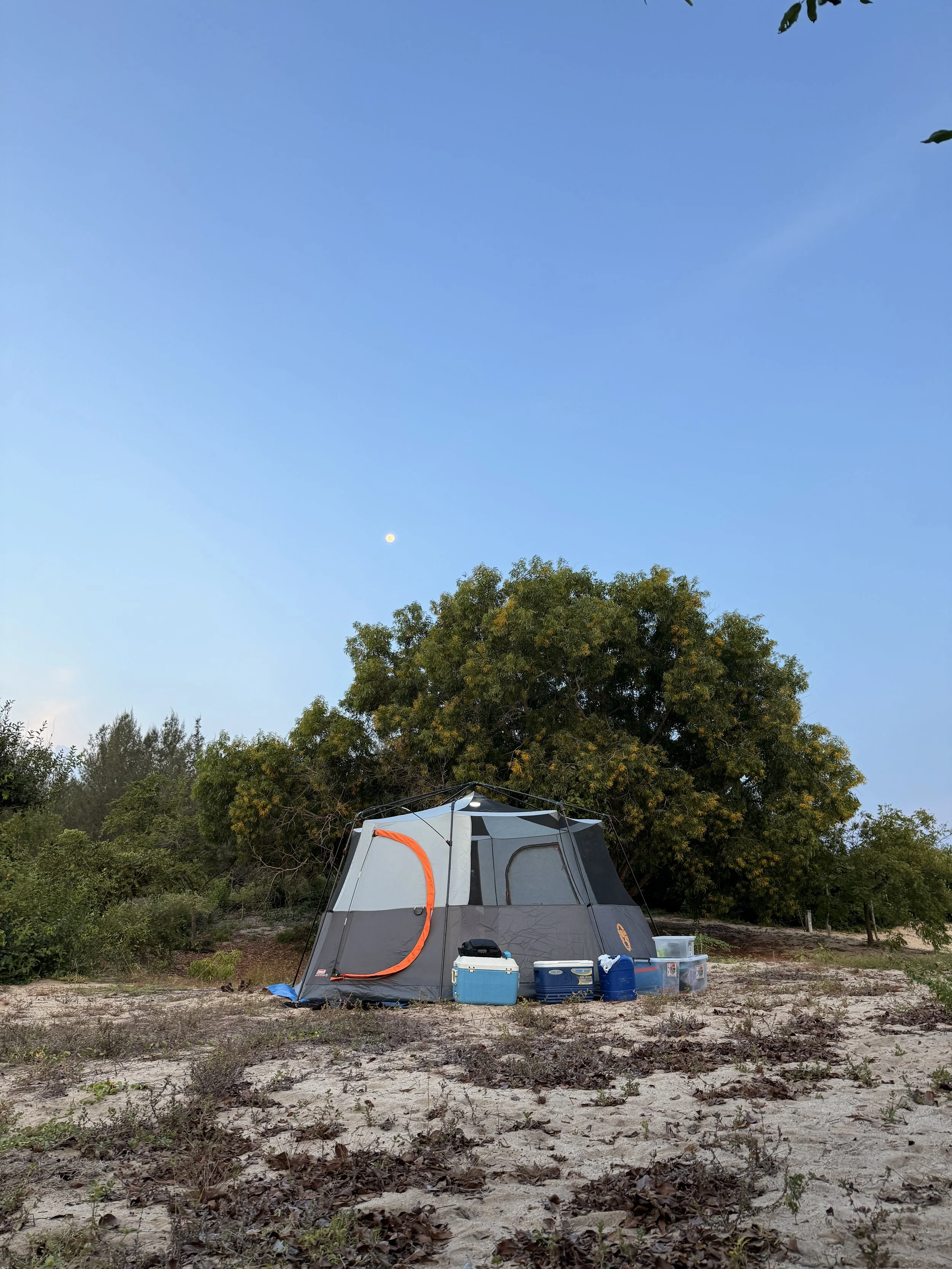
There is a particular kind of confidence that comes from packing well for camp.
Not from packing more. Not from bringing every possible item you can think of “just in case.” But from knowing that what you have brought is enough — enough for comfort, enough for weather, enough for movement, and enough to let the experience unfold without dragging half your house into the wild.
First-time campers rarely struggle because they packed too little.
More often, they struggle because they packed without understanding the rhythm of camp.
They imagine long lists of gear, multiple outfit changes, backup versions of backup items, and an entire bag filled with things they will never touch. The result is usually the same: a heavier journey, more clutter around camp, more time looking for things, and a quiet sense of being overprepared in all the wrong ways.
Packing for camping in Sri Lanka asks for something simpler and wiser.
This is not alpine cold. It is not a sterile indoor holiday. It is not the sort of trip where convenience comes from excess. Sri Lankan camping is shaped by warm days, changing evening temperatures, dust, humidity, possible rain, open air, shared movement, and the practical realities of living outdoors for a short time. If you understand those things, packing becomes much easier.
The goal is not to bring everything that could make you comfortable.
The goal is to bring the things that matter enough to disappear into the background — so you can stop thinking about your bag and start being where you are.
What this article will help you understand
If you only have a few minutes, here is the short version:
Packing well for camping in Sri Lanka is about choosing practical items for real outdoor conditions, not imagined emergencies. You need clothes that are easy to move in, a few personal essentials, weather-aware basics, and a small number of comfort items that actually make a difference. You do not need bulky extras, too many outfit options, or gear that complicates camp life more than it helps.
The best-packed camper is rarely the one with the most things. It is usually the one who can find what they need quickly, move easily, stay reasonably comfortable, and avoid turning their tent or camp corner into a storage problem.
For first-time campers especially, packing lighter often leads to a better experience.
Not because less is always better in some romantic minimalist sense, but because too much becomes friction. And outdoors, friction is tiring.
A good packing list should support the trip quietly. It should not become the trip.
Why first-time campers tend to overpack
Overpacking usually begins with uncertainty. When people do not yet know what camp feels like, they try to protect themselves from the unknown by bringing options. More clothes. More toiletries. More “backup” items. More things that seem comforting in theory but have no real role once the trip begins.
Packing can feel like control. If the outdoors are unfamiliar, a larger bag can feel like reassurance. But in practice, too many items often create the opposite effect. They make it harder to find what matters. They take up useful space. They create clutter inside tents and around seating areas. They encourage decision-making when what camp usually needs is simplicity. You do not feel more prepared when your things are disorganized in the dark. You feel more burdened.
There is also a modern habit of packing for image rather than use. People often imagine what they might want to wear, what would look good in photos, or what they are used to having nearby at home, rather than what the actual outdoor rhythm requires.
Camp quickly reveals the difference. Outdoors, the most useful item is often not the most attractive or the most elaborate. It is the one that works well, dries reasonably, layers easily, packs small, and can be used without fuss.
A well-packed bag reflects not anxiety, but understanding. When camping in Sri Lanka, understanding begins with the conditions.
Pack for Sri Lankan conditions, not for fantasy
Camping in Sri Lanka has its own practical reality, and your packing should reflect that.
In most settings, you are dealing with some combination of:
- Warm or hot daytime temperatures
- Sun exposure
- Dust or dry ground
- Humidity
- Cooler-feeling evenings or early mornings
- The possibility of rain or dampness
- Moving between sitting, walking, setting up, eating, and resting outdoors
This means you need clothing and essentials that can handle variation without requiring constant changes.
You do not need a different outfit for every phase of the day. You need a few pieces that work well across the flow of camp.
You do not need to pack for every imaginable scenario. You need to be prepared for the real ones: warmth, sweat, dirt, movement, changing light, and possible damp conditions. This is where many people misjudge things.
They pack as if camping is either much harsher than it is, or much cleaner and more curated than it is. In reality, it sits in between. Camp in Sri Lanka is often beautiful, simple, and sensory-rich — but it is still outdoors. Your bag should respect that. There is an old wisdom in traveling light across this island, especially in rural life: bring what serves, leave what burdens. Not because hardship is noble, but because ease often depends on carrying only what truly belongs with you. Camping rewards that same wisdom.
The real essentials: what actually matters
A good camping bag should cover a few core needs well:
- Clothing suited to outdoor conditions
- Basic personal hygiene
- Something for warmth or layering
- A light source
- Personal medications or health essentials
- A small number of comfort items that genuinely matter to you
That is the heart of it.
Once those are properly handled, most of the rest becomes optional.
Clothing that works, not clothing that performs
Bring clothes you can move in comfortably, sit in comfortably, and wear more than once if needed.
Think: Breathable | Practical | Not precious | Easy to layer | Suitable for warmth, sweat, and outdoor surfaces
You want clothing that can handle sitting by a fire, walking short distances, setting up camp, and settling into the evening without requiring constant adjustment.
A layer for the evening
Even in Sri Lanka, evenings and early mornings can feel cooler than people expect, especially after heat, movement, or if there is wind or rain.
A light long-sleeve layer or simple outer layer can make a big difference.
This is one of those items that first-time campers often overlook because they think only in terms of daytime temperature.
Basic hygiene, kept simple
You do not need your full bathroom shelf.
Bring only what you need to feel clean, comfortable, and functional:
- Toothbrush and toothpaste
- A small towel if needed
- Any personal care essentials
- Wipes or simple cleanup items if relevant
- Menstrual products if needed
- Any medications you rely on
The aim is not to recreate home. It is to keep yourself comfortably maintained outdoors.
A reliable torch or light
This matters more than people realize.
Outdoor spaces change completely after dark. A simple, reliable light source makes movement, finding items, and settling into the night much easier.
This is one of the most practical forms of comfort you can pack.
Personal medication and genuine needs
Anything you need regularly should be packed first, not as an afterthought.
The same goes for simple health-support items that are actually relevant to you.
Outdoors is not the place to assume you can “probably manage without” something important.
The most useful clothes are usually the simplest ones
First-time campers often overcomplicate clothing. They imagine multiple fresh outfits, “nice” camp clothes, backups for every possibility, and separate looks for evening, morning, relaxing, and moving around. In reality, camping in Sri Lanka tends to reward a smaller, more versatile set of clothing choices.
The best clothes for camp are usually:
- Comfortable in heat
- Easy to layer when the air cools
- Fine to get a bit dusty
- Easy to sit, bend, and move in
- Not emotionally stressful if they get a little smoky or damp
This does not mean you need to look scruffy. It simply means function matters more than variety.
A few well-chosen items will usually serve you better than many slightly different ones.
It also helps to think in terms of repeat use rather than freshness by habit. Indoors, we often change clothes because of routine, aesthetics, or convenience. At camp, what matters more is whether an item still works well. If it does, it may not need replacing as often as you imagine.
This is especially true on short trips.
The goal is to be comfortable, not to maintain the illusion that outdoor life should feel as change-heavy and polished as indoor life.
The comfort items worth bringing
Not all non-essential items are unnecessary.
Some things are not strictly essential, but make the experience meaningfully better. The trick is choosing a small number of comfort items that genuinely help, rather than packing a whole category of “maybe nice to have” things.
Good comfort items are usually:
- Small
- Easy to carry
- Frequently useful
- Personally meaningful
- Calming or practical
For one person, that may be a favorite light shawl or an extra pair of socks. For another, it may be a simple mug, a small notebook, or one familiar item that helps them settle.
What matters is that the item truly serves you outdoors. A good comfort item reduces friction or increases ease in a real way. A poor comfort item adds bulk, clutter, or one more thing to keep track of. This distinction matters.
The best comfort in camp often comes not from bringing more, but from bringing one or two things that help you relax into the environment more quickly.
What people almost always overpack
If there is one thing first-time campers should know, it is this: most overpacked items never leave the bag.
A few common culprits:
Too many clothes
This is by far the most common one. People pack multiple outfit changes they never use.
Unnecessary footwear
If you are bringing several pairs without a clear purpose, you are probably bringing too much.
Large toiletry kits
Most people only use a small fraction of what they bring.
Too many “just in case” extras
If an item has no clear use in the real rhythm of your trip, it is probably dead weight.
Bulky personal clutter
Books you won’t read, gadgets you won’t use, accessories you will not think about once you arrive, and items packed from habit rather than need.
Things packed for appearance
If an item is mainly there because it might look nice rather than because it helps you function outdoors, it should be questioned.
This is not about being severe or minimalist for its own sake. It is about making the trip easier on yourself.
Every extra thing must be carried, stored, found, protected, or moved. Outdoors, even small inefficiencies feel larger than they do at home.
Why lighter packing makes camp feel better
A lighter, better-packed bag does more than reduce physical effort. It changes the feeling of the whole trip.
When your things are simple and easy to manage:
Arrival is smoother
Setup is less chaotic
Your tent feels calmer
You spend less time searching
You make fewer unnecessary decisions
Moving through camp feels easier
This creates a subtle but powerful form of ease.
The outdoors already asks your senses to adjust. You are dealing with new sounds, new surfaces, changing light, and a different rhythm.
If your belongings are also complicated, that adjustment becomes harder. If your belongings are simple, the mind has less to wrestle with.
In this sense, packing well is not just about logistics. It is about protecting the quality of your attention.
A well-packed camper gets to be more present. For a Wilderfolks-style experience — one built on participation, shared rhythm, and actually being in the place — that matters a great deal.
Packing for children and families
Families often feel the urge to overpack even more than individual travelers, mostly because parents are trying to reduce uncertainty for children. This is understandable, but the same principle still applies: pack for what is truly useful, not for every possible scenario.
For children, what usually matters most is:
Practical clothing
One warmth layer
Simple essentials for hygiene
Anything genuinely needed for comfort or sleep
One familiar item if it helps them settle
Children do not usually need a large variety of things. They need enough to feel secure, comfortable, and able to participate.
Too much gear around children can actually make camp feel harder. It creates clutter, more things to track, and more opportunities for minor stress.
A simpler family setup often feels calmer for everyone. In many cases, children adapt faster than adults do. While parents are still thinking through every possibility, children are already noticing birds, dirt, wind, and the fact that something interesting is happening.
If the essentials are covered well, the rest can often be much simpler than expected.
What first-time campers often get wrong
A few packing mistakes come up again and again:
1. Packing for fear, not function
If your bag is built around anxiety, it will usually be heavier and less useful.
2. Treating camp like a fashion sequence
Camping asks for practical repeat-wear, not constant outfit changes.
3. Forgetting that evenings feel different
A light layer is often more valuable than one more daytime item.
4. Bringing too many small non-essentials
Individually small things add up into clutter very quickly.
5. Assuming “more prepared” means “more packed”
Real preparedness usually looks quieter, simpler, and easier to manage.
First time camping? Start here
If this is your first camping trip in Sri Lanka, keep your packing mindset very simple:
Pack for use, not for imagination
Choose comfort over appearance
Bring fewer, better clothing options
Include one warmth layer
Keep toiletries small
Bring a reliable light
Pack personal medication first
Allow a few useful comfort items, not many
If you are unsure about something, ask yourself: Will this help me move, rest, stay comfortable, or function better outdoors?
If the answer is no, it may not need to come.
What good packing feels like once you arrive
The reward of packing well is not the satisfaction of a perfect list. It is the feeling, once you arrive, that nothing is fighting you.
Your bag is manageable. Your things make sense. You can find what you need. You are not dragging excess into the tent. You are not sorting through a dozen unnecessary items in fading light. You are simply settling in.
This is one of the quiet pleasures of a good trip: when preparation has been thoughtful enough that it disappears.
A gentle closing thought
A good camping bag should feel a little like good guidance.
Enough to support you.
Not so much that it overwhelms you.
Practical. Quiet. Reliable.
Present when needed, invisible when not.
For first-time campers in Sri Lanka, that is often the real secret. Not packing more. Packing wiser.
Because the lighter your bag feels, the easier it becomes to arrive fully.