
Camp Etiquette in the Wild: The Small Habits That Make a Camp Feel Good
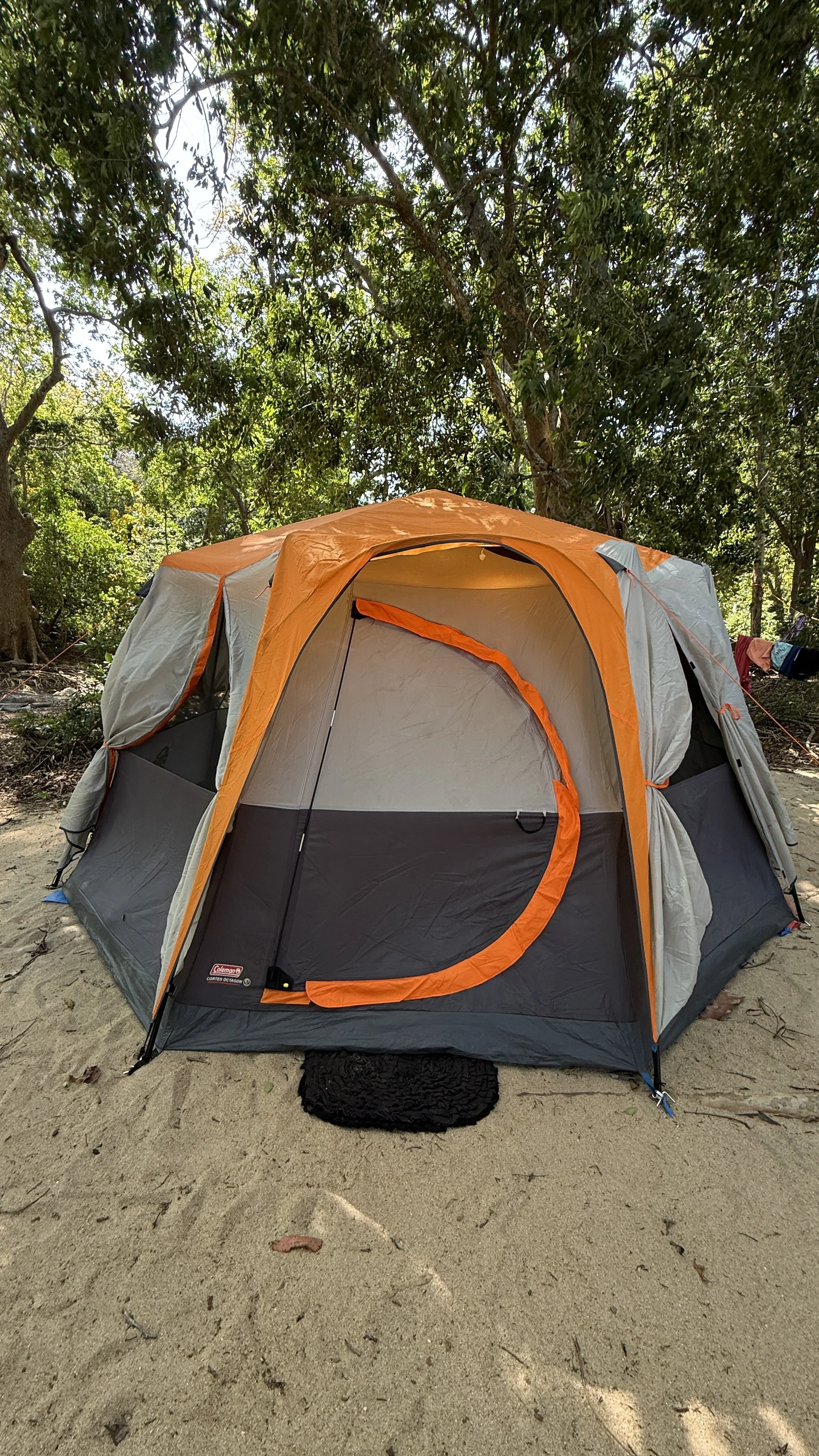
A good camp has a feeling to it.
You notice it almost immediately, even if you cannot explain it in technical terms. The space feels easy to move through. People are relaxed. Things are where they should be. Nothing feels tense, cluttered, or careless. The group seems to understand the rhythm of the place without needing constant reminders. The atmosphere is warm, but not chaotic. Comfortable, but not sloppy. Shared, but not crowded.
This kind of camp rarely happens by accident.
It is built through small habits.
Not grand rules.
Not rigid formality.
Not the sort of stiffness that drains all joy from the outdoors.
Just simple, thoughtful behavior repeated consistently enough that the whole campsite becomes easier, calmer, and more enjoyable for everyone in it.
This is what camp etiquette really is.
It is not about being polished for the sake of appearances. It is not “good manners” in the shallow sense. It is practical respect. It is the collection of small habits that make shared outdoor life work well — especially when people are living more closely together than they usually do, with fewer walls, fewer private zones, and more dependence on rhythm, awareness, and mutual consideration.
And in Sri Lanka, where camps often unfold in places that are richly alive, weather-shaped, and more sensory than indoor life, these habits matter even more. A little thoughtfulness can dramatically improve how a camp feels. A little carelessness can unsettle the atmosphere far faster than many people expect.
A torch used poorly.
Food left open.
Too much noise at the wrong hour.
A path blocked by unnecessary clutter.
Someone treating the shared space as though it were only theirs.
None of these are huge in isolation.
But together, they define whether a camp feels good.
The best camps are not necessarily the most elaborate ones.
They are often simply the ones where people understand how to be together well in the wild.
What this article will help you understand
If you only have a few minutes, here is the heart of it:
Camp etiquette is the set of small, practical habits that make shared camping easier, calmer, and more respectful. It includes how people move, speak, store things, handle food, use shared space, behave after dark, and look after the group rhythm. Good camp etiquette is not about formality. It is about creating a space where everyone can rest, participate, and enjoy the outdoors more fully.
These habits matter because camping removes many of the invisible systems that make ordinary indoor life feel orderly. At camp, people themselves become more responsible for atmosphere.
That means:
Your small habits affect everyone more directly
Disorder feels bigger outdoors
Thoughtfulness improves group comfort quickly
Inconsiderate behavior stands out more sharply
A camp feels good not only because the location is beautiful.
It feels good because the people in it are behaving in ways that support the place and each other.
Camp etiquette is not formality — it is functional respect
When people hear the word “etiquette,” they sometimes imagine stiffness.
They picture rules for rules’ sake. Polite behavior performed to maintain appearances. Something fussy, social, and slightly artificial.
Good camp etiquette is nothing like that.
Outdoors, etiquette is not decorative.
It is functional.
It exists because shared camp life works better when people behave with awareness.
That means doing simple things that make the camp more livable:
Keeping movement sensible
Not leaving things in the way
Speaking with some awareness of time and place
Looking after shared areas
Not creating avoidable inconvenience for others
Understanding that in a campsite, your habits spread outward quickly
This is especially true in a participatory, close-knit camping environment. People are often sharing tools, shared seating, common paths, light sources, meal spaces, and the general emotional tone of the place. What you do affects others more directly than it might in a hotel, a private home, or a more isolated travel setting.
That is why etiquette in camp is less about social polish and more about shared ease.
A thoughtful person makes the whole camp feel better.
A careless person makes the whole camp work harder.
That is the simplest way to understand it.
Shared space feels good when people remember it is shared
One of the most basic and most important parts of camp etiquette is remembering that the campsite does not belong only to you.
This sounds obvious, but many small forms of outdoor friction begin when people unconsciously behave as though their habits exist in a private bubble. They spread out too far, leave personal items where others must navigate around them, treat shared surfaces like personal storage, and move through the camp without noticing how their choices affect flow.
In an indoor environment, this can be mildly inconvenient.
At camp, it changes the whole feeling of the space.
A good shared camp feels legible and breathable. People can move naturally. The center of camp feels like a center, not a dumping ground. Common areas feel welcoming, not dominated by one person’s clutter. The environment supports togetherness because nobody is quietly colonizing the shared space with careless habits.
This does not mean a campsite must look sterile or overly controlled. A camp should feel lived in. But there is a difference between lived in and thoughtlessly spread out.
In Sri Lanka, where camps often exist in beautiful but practical environments — dust, uneven ground, changing weather, shared shelter, evening movement in low light — this becomes even more important. Small disorder multiplies quickly outdoors.
One misplaced bag can become a nighttime obstacle.
One carelessly chosen spot for a personal item can disrupt the natural movement of the whole camp.
One person’s habit of leaving things wherever convenient can subtly lower the ease of everyone else’s experience.
Respect for shared space is one of the clearest ways a camp stays calm.
The way people move through camp matters
Movement is one of the most overlooked parts of camp etiquette.
But it shapes the atmosphere constantly.
In a well-run camp, people tend to move in ways that feel aware but unforced. They do not rush around needlessly. They do not cut through sleeping or quiet areas if there is a more sensible path. They do not create unnecessary disturbance through restless pacing, abrupt movement, or repeated disorganized trips back and forth because they failed to think ahead.
This is not about walking slowly for the sake of it.
It is about moving in a way that suits the environment.
A campsite is usually more compact, more open, and more interconnected than an indoor space. There are fewer barriers between one person’s movement and another person’s rest, focus, comfort, or sense of ease. The camp feels better when movement is a little more intentional.
That means:
Thinking before crossing through a space
Not creating needless back-and-forth
Noticing when people are resting or settling
Understanding that after dark, movement matters even more
In Sri Lanka, where camps may be underfoot with dust, leaf litter, roots, softer ground, or dimmer light than people are used to, good movement is not only a social courtesy. It is practical wisdom.
A person who moves well through camp helps the place feel settled.
A person who moves carelessly makes the camp feel restless.
Food discipline is also camp etiquette
Food is one of the warmest parts of camp life.
It is also one of the easiest places for carelessness to create unnecessary problems.
Many of the habits people think of as “food management” are actually part of camp etiquette, because they affect not only practicality, but the entire feel of the shared space. Leaving food open, leaving serving areas messy, not clearing after yourself, or treating the meal space as someone else’s problem all change the atmosphere of camp very quickly.
A good camp meal feels generous and easy because people support that ease.
That usually means:
Not leaving food exposed carelessly
Putting things back properly
Helping keep shared surfaces usable
Not creating clutter around the eating area
Understanding that food attracts attention — from people, from insects, and in some places, from wildlife too
In Sri Lanka, where outdoor conditions can make food handling especially important — heat, insects, humidity, open air, wildlife ethics — food discipline is not fussy. It is part of both respect and comfort.
A well-kept meal area tells everyone:this space is being looked after.
That makes people settle more deeply. It also helps preserve the warmth of shared meals without letting disorder slowly turn them into stress.
Quiet matters more after dark
One of the clearest shifts in camp etiquette happens when the sun goes down.
A campsite by daylight and a campsite by night are not the same environment. After dark, the group becomes more dependent on light, rhythm, awareness, and the general calmness of the space. Noise, movement, and careless habits feel larger than they did in the afternoon.
This is why good camp etiquette always becomes more visible in the evening.
A thoughtful camper understands that after dark:
Voices may need to soften
Movement should be more intentional
Torches and lights should be used with awareness
Sleeping or quieter areas deserve more respect
Unnecessary disruption becomes much more noticeable
This does not mean the evening must become stiff or silent. Campfires, stories, laughter, and warm conversation are a beautiful part of camping. But there is a difference between life and disturbance.
A camp that feels wonderful at dusk can quickly lose that quality if people forget that nighttime changes the social and sensory conditions of the space.
In Sri Lanka, where night sound is often already richly alive — insects, wind, leaves, distant movement, the particular atmosphere of the dark — a thoughtful evening camp lets the night remain part of the experience. It does not try to overpower it with unnecessary human volume.
Quiet after dark is not about suppressing joy.
It is about keeping the quality of the place intact.
Light should be used with consideration
Artificial light becomes very noticeable at camp.
This is something many people only realize once they are in it. Indoors, bright light is normal and often taken for granted.
Outdoors, especially at night, light shapes the atmosphere of the entire space very quickly. A poorly used torch or an unnecessary bright light can make a calm camp feel harsh, restless, or more disruptive than people intend.
This is why light use is a real part of camp etiquette.
It means:
Using light only as strongly as needed
Not shining it directly into faces
Not sweeping it across sleeping areas carelessly
Not treating bright light as if the camp were an indoor room
Understanding that darkness is part of the experience, not a flaw to be erased
A considerate camper uses light to support the group, not dominate the night.
This matters for comfort, for atmosphere, and in some places for wildlife sensitivity too.
In Sri Lanka, where the night can feel beautifully textured when allowed to remain itself, harsh artificial light can flatten much of the subtle atmosphere people came to enjoy in the first place.
Good light use helps people move safely.
Bad light use makes the camp feel less settled.
That small distinction can change the tone of the entire evening.
Thoughtfulness is often invisible — and that is the point
One of the best things about good camp etiquette is that, when it is working well, it often disappears.
No one needs to keep talking about it.
No one needs to make a show of being considerate.
The camp simply feels easy.
Someone quietly puts something back where it belongs.
A path stays clear without discussion.
A person notices that another is resting and adjusts their movement.
A light is angled properly.
A cup is moved before it becomes a nuisance.
The meal area stays usable because several small acts of care keep it so.
Voices settle naturally as the night deepens.
This is the kind of thoughtfulness that makes a camp feel good.
Not dramatic generosity.
Not formal announcements.
Just the steady presence of people who understand that shared comfort is built through a hundred tiny choices.
The beauty of this is that it creates emotional ease as well as practical ease. When people sense that others are being thoughtful, they relax. They feel looked after, even when no one is “serving” them in an obvious way. The whole camp becomes more trusting, more breathable, more coherent.
That is what good etiquette does.
It makes a place feel held without anyone needing to say so.
Children learn camp culture by watching it
If children are part of the camp, etiquette becomes even more important — not because children make camps harder, but because they learn so much by observing what the adults around them normalize.
Children quickly absorb:
How shared space is treated
Whether people put things back
Whether food areas are kept properly
How voices change after dark
Whether the outdoors are treated with calm respect or casual disorder
How people move around others
This means camp etiquette is not only about the current comfort of the group. It is also part of what younger campers are being taught about how to live with others in nature.
A child who sees adults quietly respecting the shared space learns that this is normal.
A child who sees adults behave as though camp exists to absorb disorder learns that too.
In Sri Lanka, where family and shared social rhythm often carry deep cultural value, camp can be a beautiful place to model consideration in a very practical way. Not through lectures, but through visible habits. Through the ordinary discipline of living well together.
What people often get wrong
A few common misunderstandings make camp feel rougher than it needs to:
1. Thinking etiquette is about being formal
In camp, etiquette is mostly about practical respect and shared ease.
2. Treating shared space like private space
A camp feels better when people remember the common areas belong to everyone.
3. Forgetting that night changes everything
Noise, light, and movement all matter more after dark.
4. Assuming small habits do not matter
At camp, small habits shape the entire atmosphere.
5. Waiting to be asked before helping with obvious things
A little quiet initiative often makes the whole space feel better.
First time camping with a group? Start here
If you are new to shared camping, keep your etiquette simple:
Remember the space is shared
Keep your things contained and sensible
Move with awareness
Look after food areas properly
Use light thoughtfully
Let your voice suit the time and place
Notice what would make life easier for others and quietly do that
Leave the camp calmer than your carelessness would have made it
You do not need to be perfect. You just need to behave as though the camp belongs to all of you — and as though that matters.
What good camp etiquette really gives you
At first glance, etiquette might seem like a small thing.
But in practice, it shapes almost everything:
comfort,
flow,
rest,
group mood,
shared ease,
and the feeling that the camp is functioning as a real place rather than a temporary mess in a beautiful setting.
Good etiquette makes a camp more livable.
It also makes it more humane.
Because in the end, camping is not only about tents, weather, trees, or firelight.
It is also about how people behave when the walls come away.
And that is often where the real quality of a camp is revealed.
A gentle closing thought
A camp feels good when people make it easy for one another to be there.
Not through big gestures.
Through small ones.
A path kept clear.
A light used gently.
A shared table left usable.
A quieter voice after dark.
A little awareness before acting.
These things may seem minor.
But together, they create the difference between a campsite that is merely occupied —and one that feels calm, warm, and quietly well held.
That is what good camp etiquette really is. Not performance.
Just the art of making shared life in the wild feel better for everyone in it.